Showing posts with label deccan. Show all posts

Monday, 9 July 2018

Mahlaqabai Chanda : a legend of the moon

Mahlaqabai Chanda: a legend of the moon


     The word mahlaqa means visage of the moon. This was the epithet accorded by the Nizam II to a beautiful girl Chanda,  who became daughter by adoption and grew up at Nawab Ruknudowlah's palace, the Prime-minister's residence.

      Chandabibi had been born at Aurangabad in 1767 to Meda (also known as Raj Kunwar) and Basolat Khan Bakshi-e-Awwal, a descendant of Mirza Sultan Nasr, a nobleman of Balkh (now in northern Afghanistan), who came to India during Mughal emperor Shahjehan’s reign and was in his administration. Her mother Meda had two daughters, one from her first husband Haakim of Dewalha. She had a daughter Mehtaab with him who had got married to Nawab Ruknudowlah, Prime minister of Hyderabad. Since she was childless, Meda gave her second daughter Chanda to her.


Mahlaqabai Chanda, image.

Source: Deccan Chronicle.

Chanda grew up to be a celebrated courtesan, adept at dancing, at the Asaf Jahi court of Nizam Ali Khan, Nizam II and Sikandar Jah,Nizam III. Nizam Ali Khan, Nizam II used to take her along with her companions to battles at Kolar, Nirmal and Panugal. Chandabibi had learnt horse riding and archery He likened her to the moon and gave her the name Mahlaqa or visage of the moon to her. Chandabai was given the status of a nobleman by the Nizam and appointed to the umrah (the highest nobility). She also wrote poetry and had trained under Sher Mohammed Khan Iman; Khushal Khan, a descendant of Tansen and Panna Maharaj who had trained her in music and dance. She was an ardent devotee of Hazrat Ali and has composed many verses in praise of him. Prime Minister Mir Alam of Hyderabad had also tutored her. Mahalaqa Bai did not get married but was close to Raja Rambha Rao, a Maratha General and was an admirer of Captain John Malcolm, an assistant of James Achilles Kirkpatrick, British Resident at Hyderabad. She even presented her diwan to him which is now at the British Museum, London.


Mahlaqa Bai dancing in the court of Raja Rao Rambha Bahadur ,
behind him is Mir Alam, Ragamala manuscript, 1799. 

                      See page for author [Public domain], via Wikimedia Commons

She has written in both Persian and Urdu, but her Persian works are not traceable. Her Urdu works are there in some libraries.
Her works have been put together as a diwan or a collection. She is also remembered for her quick wit and gift of repartee. He pen-name was Chanda. Her poetry is well read and is available on rekhta.org. 
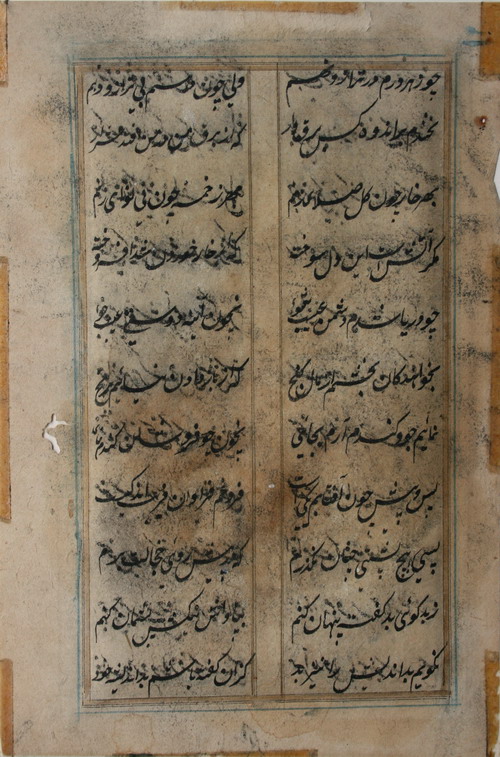

Hyderabad Mah Laqa Bhai text.jpg

Page from her diwan.
See page for author [Public domain or Public domain], via Wikimedia Commons


Chandabibi used to hold an annual fair or urs at Bagh Lingampally where many holy men and ascetics or fakirs, men of literary repute, artisans would gather and interact; she would sponsor the event and honour them for seven days. Her mother's mausoleum is at the foothill of a hillock at Maula Ali at Hyderabad She had got it constructed herself in Mughal-Rajput style. She too is buried at Maula Ali next to her mother's grave when she died in 1824 at the age of 57. She had also got constructed a step well at Tarnaka to ensure drinking water to the people in her jagirs (lands) which she had received; Hyderguda, Tarnaka, Adikmet and also Nampally. She also is responsible for Ashur -Khana Chandabibi.


Her biography Hayat-e-Mahlaqa has been written by Ghulam Samdani Khan. She remains in memory as an outstanding persona of the Deccan who had admirers; two rulers, peshwas, prime ministers, noblemen and poets. She was intelligent and consulted by the Nizam as she was part of the umrah. She strongly believed that women should be educated and opened a school for 300 girls at Nampally in Hyderabad. She had also adopted two girls and a boy with the names Husn Afza Bano, Haseen Laqa Bano and  Mohammed Maqbool. She had built a huge library during her lifetime and had commissioned the Mah-nama, a history of the Deccan.


Raja Rao Rambha Bahadur on elephant, with Khushhal Khan below and soldiers, led by another elephant with orange banner.

www.flickr.com/photos/bibliodyssey/5247473984


Raja Rao Rabanha .. f. 2v


Raja Rao Rambha Bahadur and Mahlaqabai Chanda singing, manuscript painting. 


https://www.flickr.com/photos/bibliodyssey/5247477868


  Tomb of Mahlaqabai Chanda, Maula Ali, Hyderabad.

Image Courtesy : Abhishek Patel


    Mahalaqa passed away long back but her legend lives on.  A Girls' college is run at the house where she lived. Her life has been presented in dance-drama on stage many times and people are ever eager to know more about this fascinating woman of the Deccan.


References :


  • Salar Jung Museum Bi-annual research journal, Vol. XXVII-XXVIII, 1990-1991, Hyderabad : Salar Jung Museum.
  • White Mughals/Dalrymple, William, New Delhi : Viking,2002.
  • Forgotten/Bilkees Lateef, New Delhi : Penguin Books, 2010.
  • INTACH Hyderabad Chapter - Heritage annual 2012/Reddy, Anuradha ed., Hyderabad : INTACH,2012
  • wikipedia.org


Posted by :


Soma Ghosh


@author

Monday, 15 May 2017

Seige of Golconda : end of an era

Siege of Golconda : end of an era


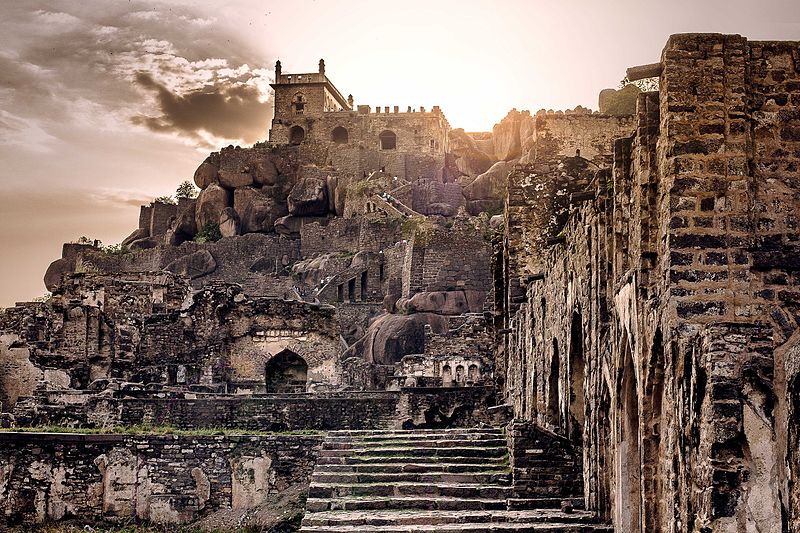
  The last ruling sultan of Golconda was Abul Hasan Tana Shah. By 1687 the Mughal forces had already conquered two Deccani kingdoms the Adil Shahi and Nizam Shahi sultanates with their capitals at Bijapur and Ahmadnagar respectively. in January,1687, Emperor Aurangzeb led the Mughal forces to capture the Golconda Fort. The siege lasted eight months. Golconda Fort was very strong fort with many bastions. The walls were made of granite.There was an excellent acoustic system in place for communication. The front gate had spikes to stop the elephants. Golconda was the only centre for diamonds at that time with the Kollur mine under them which has given the world many famous gems !


File:The Mighty Golkonda.jpg

Golconda Fort.

By Thariqmirza94 (Own work) [CC BY-SA 4.0 (http://creativecommons.org/licenses/by-sa/4.0)], via Wikimedia Commons

   The painting below shows Aurangzeb with attendants supervising cavalry and artillery as they attack the fortified city in the background. A breach has been made in the sandstone walls which the Mughal troops are traversing. The painting is from the Anne S.K. Brown Military Collection at the Brown University Library, Rhode Island, USA. The Mughals had finally entered the fort by bribing a Qutub Shahi official, Abdullah Panni, who opened a khirki in the Fateh Darwaza at the fort.


File:Emperor Aurangzeb at the Siege of Golconda, 1687.png

Aurangzeb at the siege of Golconda,painting,18th century.

See page for author [Public domain], via Wikimedia Commons


     The Mughal forces were driven by Ghaziuddin Khan Firuz Jung who was to bombard the fort's strong wall with cannons. The Fateh rahbar and Azhad-e-paikar were used. The cannon balls were heavy and used to shoot, during the siege. Kilich Khan, father of Ghaziuddin also took part in the siege. He was an experienced commnader of the Mughals. Munawwar Khan, the Mughal admiral ensured food and supply of weapons to the invading forces. Shaista Khan, Murshid Quli Khan and Ibrahim Khan were commanders in the Mughal army who positioned soldiers all around. Abdul Razzak Lari, also called Mustafa Khan from the Golconda front was a brave soldier who defended the fort during the siege and fell down seriously wounded at Nagina Bagh. He was later nursed back to health on the orders of Emperor Aurangzeb. He is well-remembered for his loyalty to Sultan Abul Hasan Qutub Shah.


Kilich Khan, Mughal commander,painting.

By Mughal dynasty - http://www.asia.si.edu/collections/singleObject.cfm?ObjectNumber=S1986.441, Public Domain, https://commons.wikimedia.org/w/index.php?curid=18230169


Elephant with mahout, Mughal, painting, 18th century.

By Unknown (production) - http://collections.vam.ac.uk/item/O73158/painting/, Public Domain, https://commons.wikimedia.org/w/index.php?curid=17701060

Nawab Sháyista Khán.jpg

Shaista Khan,Mughal commander,painting.

By Mughal Style - http://www.britishmuseum.org/research/search_the_collection_database/search_object_details.aspx?objectid=231822&partid=1&searchText=mughal&fromADBC=ad&toADBC=ad&numpages=10&images=on&orig=%2fresearch%2fsearch_the_collection_database.aspx&currentPage=34, Public Domain, https://commons.wikimedia.org/w/index.php?curid=17774211


  The siege lasted for eight months. The Qutub Shahis defended their fort to the maximum. Sultan Abul Hasan Tana Shah was in no mood to surrender, even though one of his commanders Muqarrab Khan changed loyalties. High intensity rockets were fired on the Mughal camps around the fort, from inside. The Mughals face many difficulties in capturing the fort. Cannon fire from the Golconda fort deterred the Mughal forces. Kilich Khan,long time commander and father of Ghaziuddin Firuz Jung, died during the siege.  

    However they did not give up. When supplies arrived they would start fresh attacks. Finally they could enter the fort when they could bribe a Qutub Shahi official Sarandaz Khan to open a gate by which the soldiers entered the fort, lead by Ghaziuddin Firuz Jung. The Sultan was captured and so was the Kollur mine by the Mughals. The Sultan was taken to Daulatabad fort. Some important diamonds were handed over to Emperor Aurangzeb which included the Noor-ul-Ain, Kara Diamond, Hope diamond, Dariya-e-noor and the Regent diamond. Mir Qamaruddin Khan, son of Ghaziuddin Firuz Jung became the viceroy, also called Asaf Jah I as Ghaziuddin Firuz Jung had died of natural causes. He was the viceroy of the Deccan appointed by the Mughals. He was given the title Chin Kilich Khan by emperor Aurangzeb in 1690, Nizam-ul-mulk by Farukhshiyar in 1713 and Asaf Jah by Muhammad Shah in 1725. He  started the line of Asaf Jahis or the Nizam rule in the Hyderabad-Deccan.


Mir Qamaruddin Khan, Asaf Jah I, Viceroy of the Deccan,painting, 1800.

By Unknown - 1, Public Domain, https://commons.wikimedia.org/w/index.php?curid=40816594


References :

  • History of the Qutub Shahi dynasty/Sherwani,H.K,New Delhi : Munshiram Manoharlal,1974.
  • M.A.Nayeem/The heritage of the Qutub Shahis of Golconda and Hyderabad,Hyderabad: Hyderabad Publishers,2006.
  • wikipedia.org

Posted by

Soma Ghosh

Ⓒ author
Thursday, 11 May 2017

Kingsmen of Golconda ; Prime ministers and nobles

Kingsmen of Golconda : prime ministers and nobles


    The Golconda kingdom attracted many traders,merchants, artists,intellectuals and scholars from faraway lands like Persia. Many of them entered the service of the Qutub Shahi kings. Some of them became prime ministers and held many high posts in the government. Historians have mentioned them in their narrations of Golconda.
  •  Mir Jumla Musatafa Khan(1550-1565) 
          His origin was from Persia and he migrated to Golconda and joined the army. He rose to become an Amir. Along with a few more Amirs  he received Mohammed Ibrahim,youngest son of Sultan Quli on the outskirts of the kingdom with an army. He invited him to ascend to the throne. All this was in 1550. Ibrahim soon became the Sultan and he was made Mir Jumla Mustafa Khan soon after. He displayed great  political talent and wisdom to bring about some unity among the Deccan Sultans of Bijapur, Golconda and Ahmadnagar. However Mustafa Khan seemed to have acted independently in the handing over of the land between rivers Krishna and Tungabhadra to the Adil Shahis. This angered Nizam Shah who complained about him to the Golconda Sultan and ensured his exit from Golconda. He was asked to leave to Mecca with his personal belongings which included pearls,gems, camels and men. However he went to Bijapur and stayed there for 12 years. He was not favoured by the prime-minister of Bijapur,Kishwar Khan, and was was surreptitiously murdered in a forest in 1577.
  •    Meer Shah Meer (1579-1582)
   His name was Meer Taqi and he was from Persia. He too came to Golconda for better prospects. He joined the service of the Qutub Shahis under Sultan Ibrahim Qutub Shah and by 1579 he became a commander in his army. He took possession of the Kondaveedu Fort in April, 1579. The title Meer Shah Meer was conferred on him by the Sultan. and Meer Taqi's daughter was engaged to the Sutan's second son and crown prince Hussain Quli. However circumstances changed and Mohammad Quli the Sultan's third son became the king. Golconda lost at Naldurg, Bijapur though the new king himself joined the invading armies. In 1682 the Sultan dismissed Meer Taqi and sent him back with his daughter. He died a broken hearted man on the way.
  •    Mir Momin Astarabadi (1585-1624)
  Mir Momin Astarabadi was from Astarabad in Persia (Iran).  He was from a family of scholars and his family had instilled him with qualities like discipline and civility. He worked as a tutor to the imperial crown prince, Hyder Mirza but  as the prince died unexpectedly followed by his father Tahmasp Safavi; he left Persia and went to Mecca. Finally he came to Golconda in 1580 when Sultan Mohammad Quli was its ruler. 

     Mir Momin was teaching theology and lecturing in mosques and soon became well known in Golconda. He was of the Shia faith and was soon spotted by the Sultan who appointed him as his Peshwa in 1585.  Mir Momin was the chief architect of the city of Hyderabad. He is buried in Daira-e-Mir Momin which was developed by him as a graveyard during his lifetime.


Mir Momin Astarabadi.


  • Shaikh Mohammad Ibn-e-Khatoon (1629-1649)
   He was first a minister and ambassador in 1615 A.D. under the 6th Sultan Mohammad Qutub Shah. He went to Persia and returned to Golconda after the Sultan's death. He was made Peshwa in 1628. He died on his way to Mecca. However his body was brought to Hyderabad and he is buried near Purani Haveli at Hyderabad.      
  • Mir Jumla Muhammad Sayeed (1643-1656) 
               He was from Isfahan in Persia. He came to Golconda as a trader and became a wealthy diamond merchant. He later joined the service of the Sultan to become a general and was a appointed as governor of Karnatak. However he fell out with the Sultan when his son Mohammad Ameen was arrested. He appealed to Mughal Emperor Shahjahan; Aurangzeb attacked Golconda in 1656. Sultan Abdullah Qutub Shah entered into a peace treaty. His son was released. He joined the Mughals and died as a governor of Bengal. A tank in Hyderabad is named after him.

    
Muḥammad Saʿíd,Mír Jumleh.jpg

Mir Jumla Muhammad Sayeed,painting,17th century,Golconda.

By Golkonda Painters - http://www.britishmuseum.org/research/search_the_collection_database/search_object_details.aspx?objectid=265604&partid=1&searchText=mughal&fromADBC=ad&toADBC=ad&numpages=10&images=on&orig=%2fresearch%2fsearch_the_collection_database.aspx&currentPage=87, Public Domain, https://commons.wikimedia.org/w/index.php?curid=17783132


  • Neknam Khan
    He was a prime minister in the Qutub Shahi reign, his original name was Raza Quli and he had come from Persia. He became Neknam Khan for his loyalty during the rebellion of Muhammad Sayeed. He was scholarly, a poet and an administrator. He was an accomplished general who commanded 40,000 troops. He was posted in the Karnatak province during the reign of Sultan Abdullah Qutub Shah. He died in 1672. His tomb is at the necropolis at Ibrahimbagh in Hyderabad.
  • Khairat Khan
     He was first ambassador under Sultan Abdullah to Persia.He returned in 1634 and was made a minister.He died in 1655. He is buried at Gowlipura in Hyderabad.
  • Musa Khan
   Musa Khan was a mahaldar  and a general during the reign of Sultan Adullah. He built the Musa Burj at the Golconda Fort and the Toli Masjid. He defended the fort during the first attack by the Mughal forces in 1656. He was later disloyal and was confined in 1674.
  • Syed Muzaffar
    He was close to the royal family of Persia. He was the first minister of Sultan Abul Hasan Tana Shah. He was later dismissed because of disloyal acts. He is buried at Hari- Bowli in Hyderbad.
  • Madanna and Akanna
    Madanna was a Hindu from Hanamakonda. The family had links with the Qutub Shahi rulers. Madanna was made peshwa under Abdullah Qutub Shah. Later he became dewan (1674-1686) under Sultan Tana Shah. His brother Akanna assisted him as his secretary. Both were killed in a conspiracy.


References :

  • The Qutub Shahi prime ministers/Rao,Bhoopala,K.V, Hyderabad : Mahamantri Madanna Trust,1992. 
  • M.A.Nayeem/The heritage of the Qutub Shahis of Golconda and Hyderabad,Hyderabad: Hyderabad Publishers,2006.


Posted by :


Soma Ghosh


Ⓒauthor


Tuesday, 13 December 2016


Golconda diamonds : a glittery past


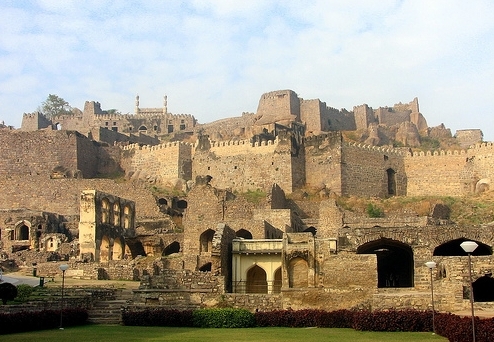
    Golconda was an important centre for diamonds during the Qutub Shahi reign in Deccan history of India. There were about 38 mines in India out of which 23 were in the Golconda kingdom. These diamonds were a status symbol and rulers and royals wanted to own one. A bustling medieval market thrived at Golconda.

File:Golconda fort.jpg

Golconda Fort view.

No machine-readable author provided. Bobsodium assumed (based on copyright claims). [CC BY-SA 2.5 (http://creativecommons.org/licenses/by-sa/2.5)], via Wikimedia Commons


Map showing mine areas.

By Ball - A Manual of the Geology of India, Public Domain, https://commons.wikimedia.org/w/index.php?curid=42974684

The mines were present along the River Krishna. From there the raw stones were taken to the capital where they were cut and polished. Golconda was  thus not only a trading centre but a centre for expertise with diamonds. Trading was done at place called Caravan-i-sahu, near the fort.The diamond market was famous all over the world.The diamonds mined there came to be known as Golconda diamonds. Some of the mines were at Kollur,Partiyala,Gollapally, Mallavally,Ramallakota, Banganapally and Vajrakarur (old name).

Reports of the existence of diamonds had come from the accounts of the visit of Marco Polo the Venetian traveller (1254-1324) during the reign  of Kakaitya queen, Rudramadevi. Later another Venetian Niccolo de Conti who had travelled in the 15th century also reported the same.


Diamond mines in the kingdom of Golconda.

By P. van der Aa, Leyden, Leyden - http://www.columbia.edu/itc/mealac/pritchett/00routesdata/1500_1599/golconda/earlyviews/earlyviews.html, Public Domain, https://commons.wikimedia.org/w/index.php?curid=19044833

Golconda was a trade centre for other precious stones, spices and textiles. The diamond trade drew travellers from far including Europe. Jean Baptiste Tavernier , John de Thevenot and Francois Bernier were merchants who had travelled to Golconda and have left accounts of their travels.  The other visitors included Henry Howard, Benjamin Heyne,James Anderson,H. W Voysey,W.Scott, T.J. Newbold and Alexander Walker over the decades and centuries after Tavernier's visit.


Jean Baptiste Tavernier in Oriental dress,1679.

By Joan Hainzelman - Bibliothèque nationale de France, Public Domain, https://commons.wikimedia.org/w/index.php?curid=2705050

Different types of mines were found. Sometimes it would be a tunnel or a pit or group pf pits in an area. Many workers used to be employed for mining including women, men used crowbars for digging and the women removed the earth. The mines were usually a few feet deep. Diamonds were an important trading item with Asia and Europe and Golconda has been one of the largest producer of diamonds between 16th and early 18th centuries.

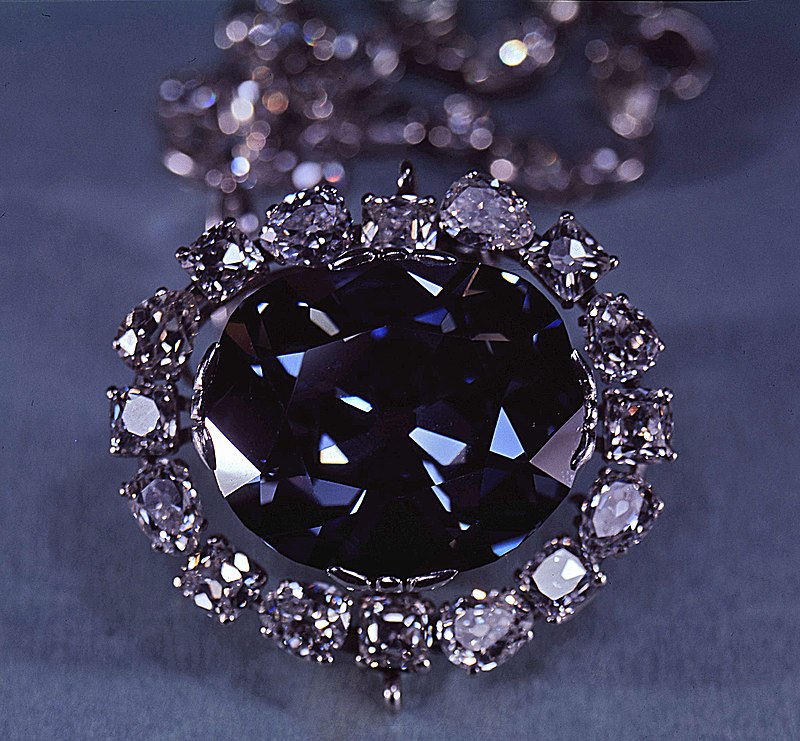
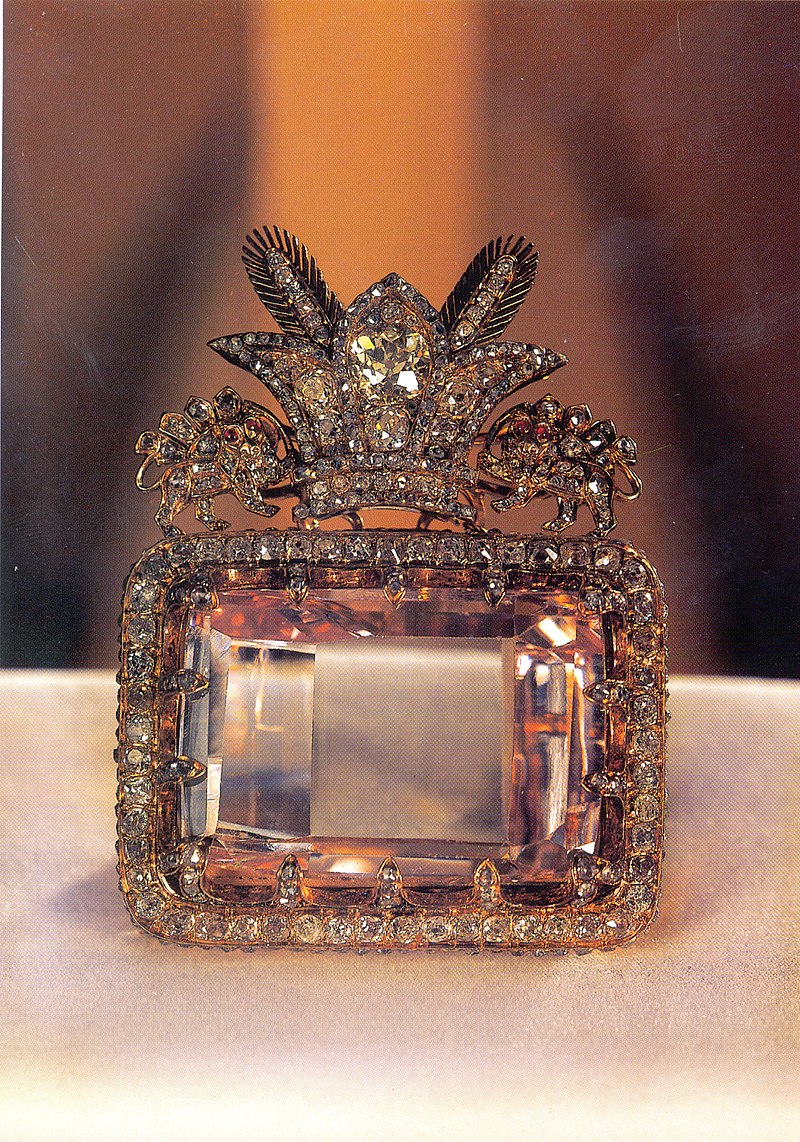
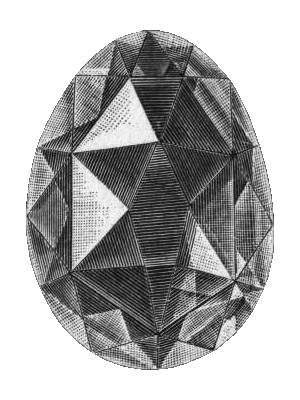
The most important diamonds which still elicit interest are an impressive list; this includes the Kohinoor, the Hope diamond, and the Dariya-e-noor. The Sancy diamond is also from Golconda. Other diamonds include the Great Mogul, Golconda Graff, Great Table, Hastings, Idol's eye, Kirti noor, Noor al ain, Ahmedabad diamond,Pitt-Regent,Taj-i-man,Pigot diamond, Orlov diamond,Agra diamond etc.

Most of the Deccani diamonds have left the shores of India, exchanged hands  but the allure and mystique of these diamonds are forever.

Picture of a diamond.

The Hope diamond.

By Unknown - http://siarchives.si.edu/collections/siris_sic_8819, Public Domain, https://commons.wikimedia.org/w/index.php?curid=19610890
The Daria-e Noor (Sea of Light) Diamond from the collection of the national jewels of Iran at Central Bank of Islamic Republic of Iran.jpg

Dariya-e-noor diamond.
By Unknown - Collection of the national jewels of Iran at Central Bank of Islamic Republic of Iran, Public Domain, https://commons.wikimedia.org/w/index.php?curid=40817749


The Kohinoor diamond in the British crown.

By Cyril Davenport (1848 – 1941) - G. Younghusband; C. Davenport (1919). The Crown Jewels of England. London: Cassell & Co. p. 18., Public Domain, https://en.wikipedia.org/w/index.php?curid=49032641

Regent (diamond) black.png
The Regent-Pitt diamond.
By Ahnode - Nordisk familjebok, Public Domain, https://commons.wikimedia.org/w/index.php?curid=6362452


File:Sancy (diamond) black.png
The Sancy diamond.

By Ahnode (Nordisk familjebok) [Public domain or Public domain], via Wikimedia Commons


References :
  • Khalidi,Omar/Romance of the Golconda diamonds, Ahmedabad : Mapin Publishing, 1999.
  • wikipedia.org


Posted by :


Soma Ghosh


© author

Friday, 9 December 2016

Charminar : grand monument of Hyderabad


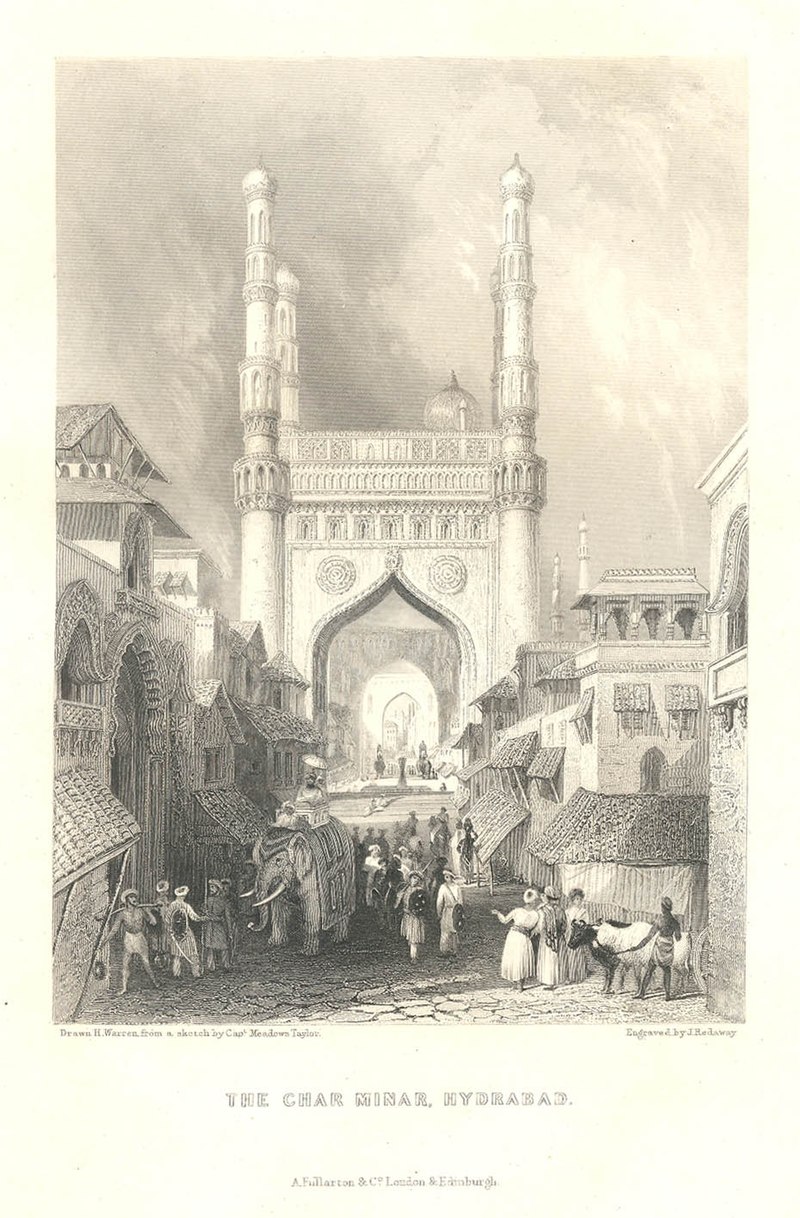
        Charminar is the symbol of Hyderabad; a grand ceremonial monument. It was commissioned by the founder of the city Sultan Mohammad Quli Qutub Shah, the fifth ruler among the Qutub Shahis of the Deccan. The plan of the new city as envisaged by its founder and planned by Mir Momin Astarabadi, his prime minister, had two commercial thoroughfares intersecting at right angles. At the crossing stands the Charminar, a magnificent sight to behold. It is a masterpiece of Qutub Shahi architecture and was completed in 1591. The four huge  arched portals is in the pattern of a quartet each spanning around 11 metres across. At each corner stand the minarets or towers which rise up to 56 metres.They are four-storied. Staircases go up to the balconies and beyond. The Charminar was built to commemorate the eradication of a plague. it is made of granite, limestone, mortar and pulverised marble.

  It is believed that the upper story had a school. Some historians opine that it was used as a pumping reservoir for water from the Jallaplli tank to the palace complex through pipes. It is also believed that the magnificent Charminar only served as a gateway overlooking the piazza into which the royal palaces opened. Guards used to be positioned at the at the Charminar. The western gate served as the gateway of the royal palace.

The western section of the roof of the Charminar has a mosque with 45 prayer spaces with large space in front on whose eastern side are verandahs. A legend says that there is a tunnel connecting Golconda and the Charminar. Another romantic folklore has it that the monument is built at the spot where Mohammad Quli first met Bhagmati who later became his queen.

     In front of the Charminar  is the Charkaman built in 1594 with four arched gateways originally meant to be an open square space, the city piazza. A  fountain-cistern, the Gulzar Hauz originally called Charsoon ka hauz is in the middle of the square. Drummers operated on the eastern gateway, the Naqar Khan-e-shahi, now called as Kali Kaman. The North arch is called the Machchli Kaman(meaning fish arch). The western arch was called Daulatkhana-e-baatil which was decorated with gold tapestry by the prime minister;also a pillar next to it had verses inscribed to protect the royal palaces from evil.

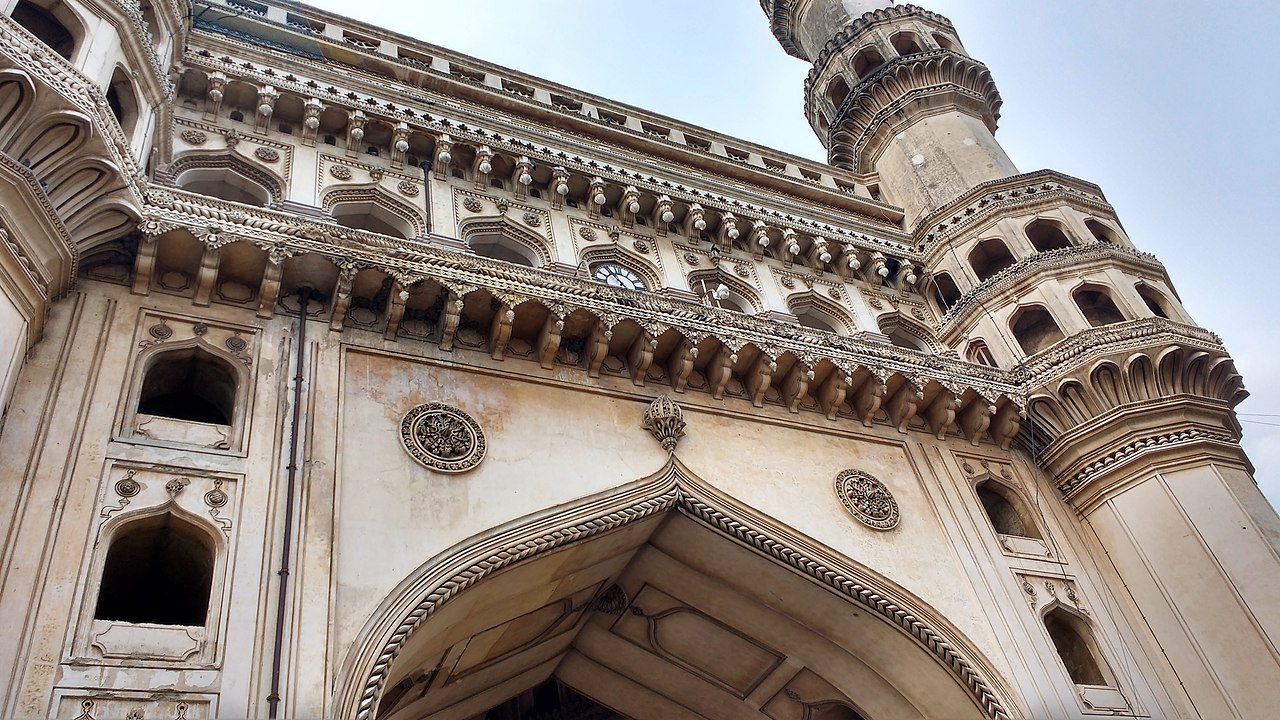
The Charminar is architecturally grand,with its lofty arches and arcaded galleries with foliated balconies. The minarets with circular shafts reach out to the sky. Beautiful stucco decorations are seen inside of the Charminar.

No elephants-led royal processions pass from under the kamans or arches anymore; but on seeing this magnificent monument one can visualise and still hear the echoes of the drums of the royal musicians from centuries ago.

The Char Minar, Hyderabad.jpg


Charminar, 18th century drawing.


By Fullarton's Gazetteer - http://www.columbia.edu/itc/mealac/pritchett/00routesdata/1700_1799/hyderabad/charminarearly/charminarearly.html, Public Domain, https://commons.wikimedia.org/w/index.php?curid=19107417


Arched Corridor on the Top Floor of Charminar (Hyderabad).jpg


Archways on the Charminar.

By Divya Gupta - Own work, CC BY-SA 3.0, https://commons.wikimedia.org/w/index.php?curid=28672819

Image result for charminar images download

Charminar at Hyderabad.


By Gopikrishna Narla (Own work) [CC BY-SA 3.0 (http://creativecommons.org/licenses/by-sa/3.0)], via  


View near Charminar during the month of Ramzan, 2017.

Image courtesy : Saurabh Chatterjee


Charming Charminar 05.jpg


Details on Charminar.


By Aishwarya nemani - Own work, CC BY-SA 4.0, https://commons.wikimedia.org/w/index.php?curid=51823618


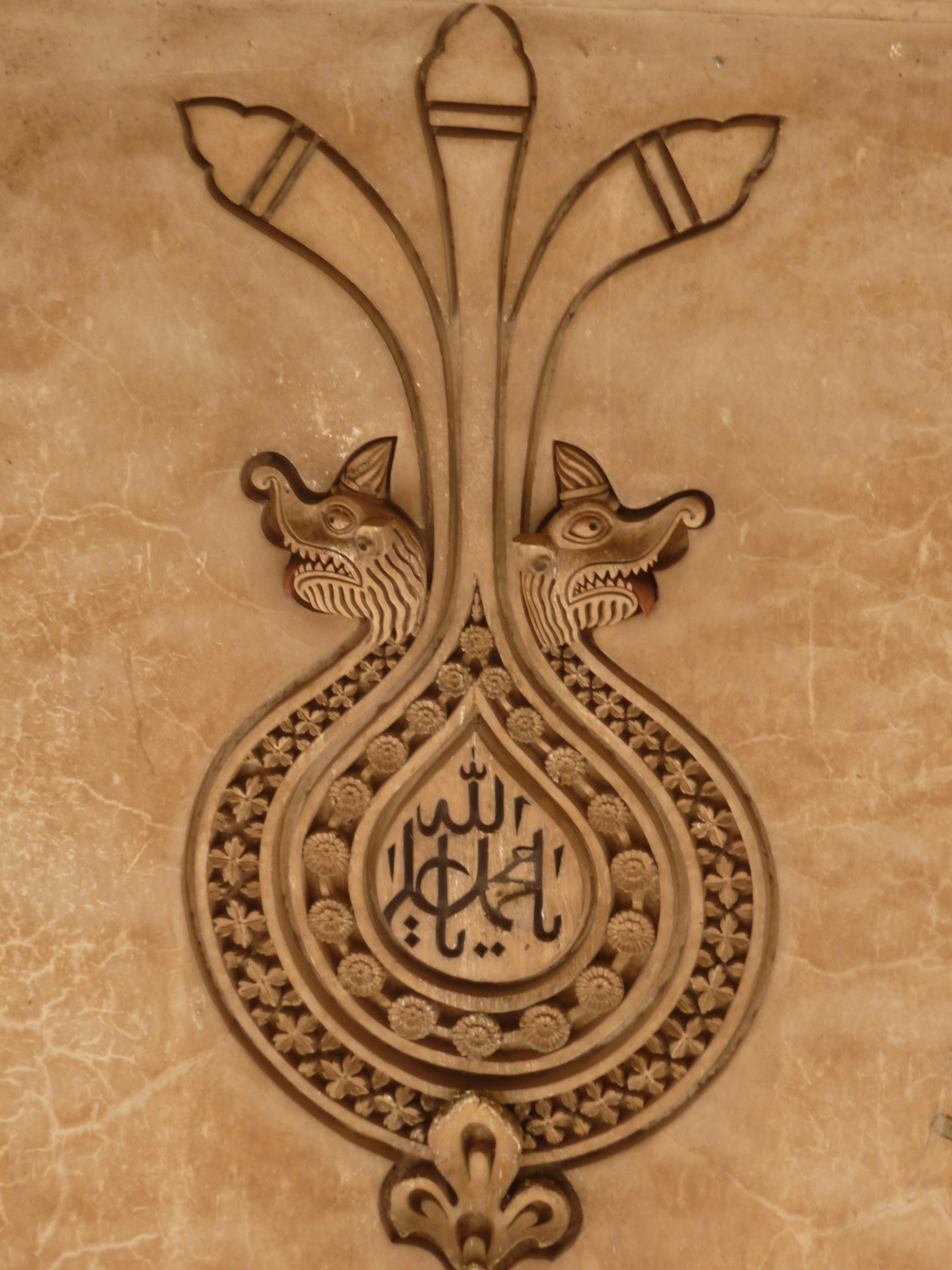
File:Sculpture inside Charminar.jpg

Sculptural pattern in stucco inside Charminar

By Shijiltv (Own work) [CC BY-SA 3.0 (http://creativecommons.org/licenses/by-sa/3.0)], via Wikimedia Commons

Image result for charminar images

Design of alam (standard) inside the Charminar.

By Jonathan Freundlich (Own work) [CC BY-SA 3.0 (http://creativecommons.org/licenses/by-sa/3.0)], via Wikimedia Commons

Char Minar (Details2).jpg

Floral stucco work on Charminar.

By Navneel neeraj - Own work, CC BY-SA 4.0, https://commons.wikimedia.org/w/index.php?curid=51368363

Decoration on the Charminar.jpg

Decoration inside the Charminar.

By Bernard Gagnon - Own work, CC BY-SA 3.0, https://commons.wikimedia.org/w/index.php?curid=35183015


File:Charminar Stairwell.jpg

Spiral stairway inside the portals at Charminar.

By Vu2sga (Own work) [CC BY-SA 3.0 (http://creativecommons.org/licenses/by-sa/3.0)], via Wikimedia Commons


References :

  • The art and architecture of the Deccan Sultanates/George Michell and Mark Zebrowski,Cambridge : Cambridge University Press,1999.
  • wikipedia.org
  • Hyderabad 400 years/Raza Ali Khan,Hyderabad : Zenith Services,1990.


Posted by :


Soma Ghosh


© author


Saturday, 26 November 2016

Taramati and Premamati : royal dancers at the Qutub Shahi court

Taramati and Premamati : royal dancers at the Qutub Shahi court


       Two beautiful dancers were courtesans at the VIIth Qutub Shahi Sultan Abdullah Qutub Shah's court (1626-1672) and during Abul Hasan Tana Shah (1672-1686), the last Qutub Shahi Sultan's reign : Taramati and Premamati. They had beautiful voices and enthralled the kings with their singing and dancing.They had pavillions built for them. Taramati Baradari is two storeyed , square shaped with strong arches on all sides, a typical Qutub Shahi structure with fine acoustics; and is located  some distance away from the Golconda Fort on a hillock. It is believed that when Taramati sang the breeze used to carry her mellifluous voice to the Sultan who was two kilometres away. The sisters have also been said to have danced on moonlit nights on ropes connecting the Baradari to the Golconda fort. Taramati was a dancer and singer par excellence and devoted her entire life to her art. She used to entertain people at the Taramati Baradari. A legend says that Taramati continued dancing even when Emperor Aurangzeb had asked her to stop.


On the opposite side is the Premamati mosque, which is believed to have been used by them for offering prayers. Both the sisters are buried in the royal cemetery of the Qutub Shahis at Ibrahimbagh in Hyderabad.


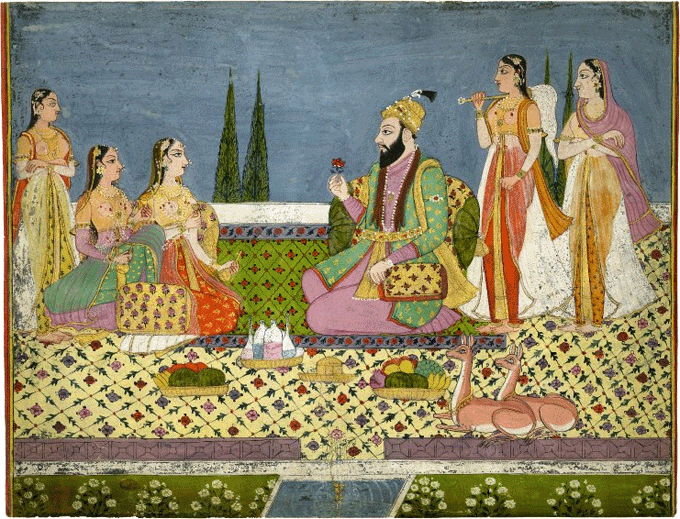
Abdullah Qutb Sháh on a Terrace with Attendants.jpg
Sultan Abdullah Qutub Shah with attendants, painting, Deccan School, 18th century.

By Deccan School - http://www.harekrsna.com/sun/features/12-11/features2319.htm, Public Domain, https://commons.wikimedia.org/w/index.php?curid=21077967


 Taramati (probably), artist's representation (image at the Baradari complex,2016)

Pic : Isha Vatsa         


Premamati (probably),
artist's representation (image at the Baradari complex,2016)

Pic : Isha Vatsa             

Taramati Baradari.jpg

Taramati Baradari near Golconda, Hyderabad

By Chiranjeevi Ranga - I took the snap.., CC0, https://commons.wikimedia.org/w/index.php?curid=15997210

File:Night View of the Great Golconda Fort.jpg

Night view at Golconda Fort.


By Devsneha (Own work) [CC BY-SA 4.0 (http://creativecommons.org/licenses/by-sa/4.0)], via Wikimedia Commons


Taramati mosque inside the Golconda Fort complex.

By Bernard Gagnon - Own work, CC BY-SA 3.0, https://commons.wikimedia.org/w/index.php?curid=34267456


Abul Hasan Qutb Shah.jpg


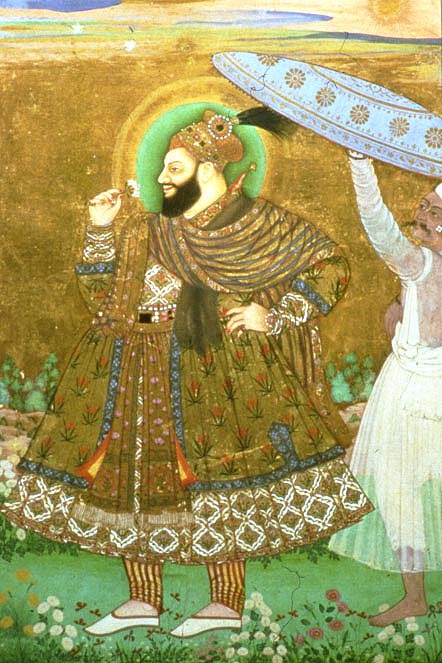
 Abul Hasan Tana Shah, the last Qutub Shahi sultan.

Public Domain, https://commons.wikimedia.org/w/index.php?curid=244237


Tombs of Taramati and Premamati.

Pic source : Isha Vatsa


References :


  • Khan, Raza Ali/Hyderabad 400 years (1591-1991), Hyderabad : Zenith Publishers,1990.
  • wikipedia.org


Posted by  :


Soma Ghosh

© author