Showing posts with label art of golconda. Show all posts

Tuesday, 16 May 2017

Gates of Golconda : the darwaza at the fort

Gates of Golconda : the  darwaza at the fort


       The darwaza or the doors or gates of any fort  or palace have played an important role in its history. Besides being functional, they add character and mystique to the appearance of the structure they are a part of; sometimes with its own unique architecture.They seem to entice the visitor to enter through them and find a new experience or sight within.


        There are eight important gates at the Golconda Fort. Bala Hissar Darwaza, Fateh Darwaza, Banjara Darwaza,Moti Darwaza, Patancheru Darwaza, Mecca Darwaza,Yali Darwaza, etc.   Through these gates an elephant with its mahout would easily pass. The doors are made of teakwood. The entrance doors of the gateways have large iron studs and iron spikes in order to prevent elephants from damaging the fort; relevant at the time they were built. The gates are tall and colossal.


      The Bala Hissar Gate depicted below shows Indo-Islamic design in stucco between the arch and lintel with a heraldic lion and some mythical animals. The peacock motif had been used  decoratively above the door. This gate leads to the second level of fortification.


File:Golconda Fort 110.JPG

Bala Hissar Darwaza,Golconda Fort.


By Karthik Uppaladhadiam (Own work) [CC BY-SA 3.0 (http://creativecommons.org/licenses/by-sa/3.0)], via Wikimedia Commons

File:Golconda fort, andra pradesh entrance door.JPG

Entrance door, Golconda Fort.

By Pravina (Own work) [CC BY-SA 3.0 (http://creativecommons.org/licenses/by-sa/3.0)], via Wikimedia Commons


File:Golkonda Fort- A view from the front gate.jpg
Fortifications, Golconda Fort.

By Pranav Kumar (Own work) [CC BY-SA 4.0 (http://creativecommons.org/licenses/by-sa/4.0)], via Wikimedia Commons


File:Golconda Fort 42.JPG

 Gateways inside the Golconda Fort.

By Karthik Uppaladhadiam (Own work) [CC BY-SA 3.0 (http://creativecommons.org/licenses/by-sa/3.0)], via Wikimedia Commons

  The Fateh Darwaza is the gate through which Emperor Aurangzeb's forces entered the fort. it was opened by bribing a Qutub Shahi official Abdullah Khan Panni.The gate is on the south through which one can enter the fort. This gateway is 13 feet wide and 25 feet high It has iron sheets with spikes stuck on its teak doors. A strong wooden bar was sued to secure the door , with two sockets on each side. An open space between the first entrance and second entrance; where guards used to be posted. Makka Darwaza has an covered space between its outer and inner entrance. The Moti, Patancheru and Banjara Darwaza too have a covered space between its entrances. Link roads connect all the gates to the Bala Hissar Darwaza.


Door, Fateh darwaza,Golconda Fort.

Pics Source : Vartika Singh


Doors, Moti darwaza,Golconda Fort.

Pics Source : Vartika Singh


Doors, Banjara darwaza, Golconda Fort.

Pics Source : Vartika Singh


Door, Makka Darwaza,Golconda Fort.

Pic Source : Vartika Singh

  
      Below is depicted the Yali darwaza. It pierces the middle fortification and has an interesting broad lintel which has a lotus medallion with mythical animals on it's side, probably yalis.  Swans with worms in their beaks are also seen. On top is a pointed space surrounded by animal and bird motifs.

File:Golconda Fort 009 - Gate.jpg

Yali Darwaza,Golconda Fort.

By Bernard Gagnon (Own work) [GFDL (http://www.gnu.org/copyleft/fdl.html) or CC BY-SA 3.0 (http://creativecommons.org/licenses/by-sa/3.0)], via Wikimedia Commons


References :


  1. wikipedia.org
  2. The heritage of the Qutb Shahis of Golconda and Hyderabad/Nayeem,M.A,Hyderabad : Hyderabad Publishers,2006.
  3.  Marg, Vol XXXVII No:3, Bombay : Marg Publications.


Posted by :


Soma Ghosh


Ⓒauthor


Saturday, 15 April 2017

Qutub shahi architecture : splendour in stucco

 Qutub shahi architecture : splendour in stucco


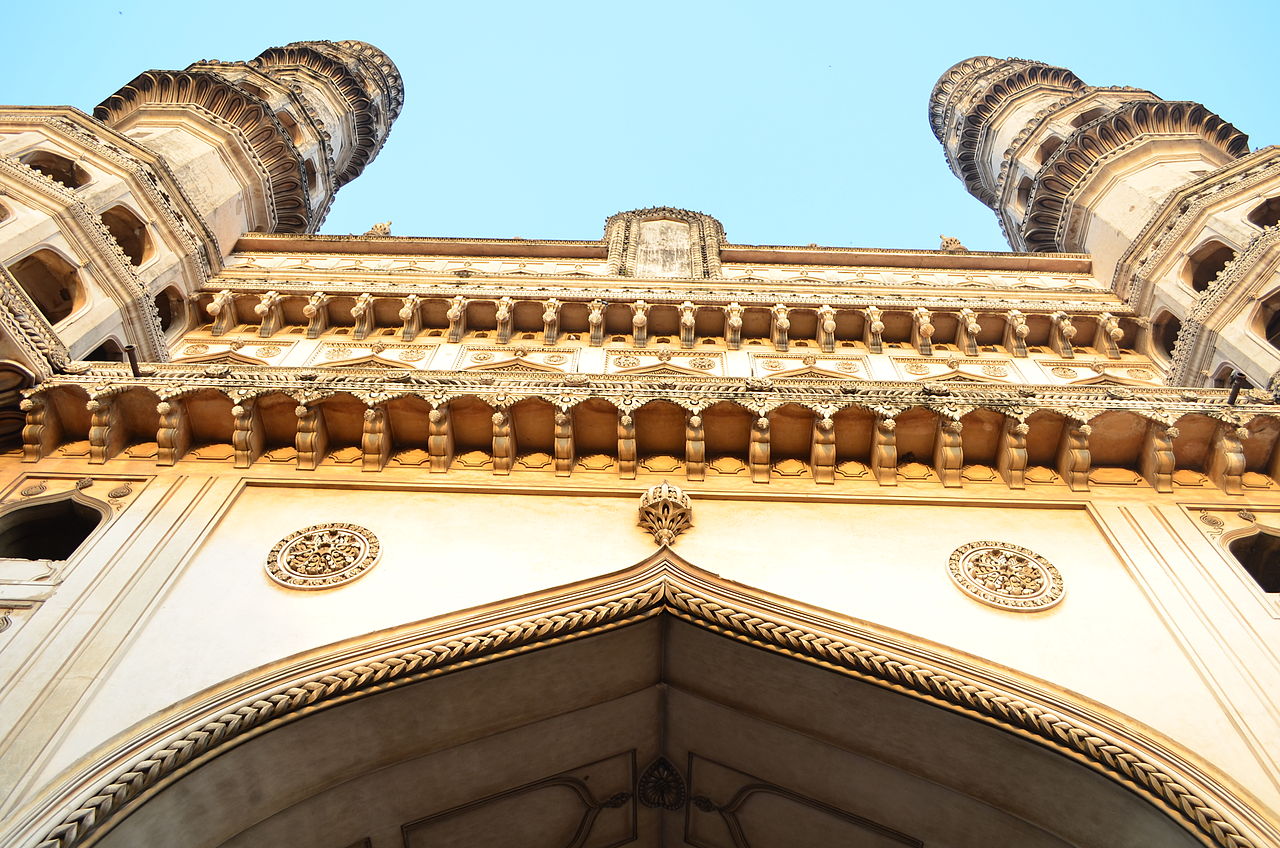
  The word stucco means  a 'fine plaster used for coating wall surfaces or moulding into architectural decorations', technically. The human imagination and  creativity knows no limits and this  is evident in the beautiful depictions and artwork on the Qutub Shahi monuments. The Indo-Islamic motifs with foliate borders and mythical animal and bird motifs are stunning in composition. They are found at the Fort's darwazas, mosques, the Qutub Shahi tombs  and on the Charminar. Along with the arches,domes and minarets the overall effect mesmerises the viewer who is lucky enough to see them. The intricate carvings leaves one simply spellbound.

  Depicted below is the first view while entering the Fort. The Bala Hissar darwaza. One finds lions, peacocks and mythical animals. The arch borders above the lintel is also exquisitely decorated. An open lotus pattern can be seen below the mihrab shaped niche which is flanked by the ornately carved peacocks. The roundel next to the  heraldic lion above the arch reminds one of the Persian seamless motifs.  Stucco designs are seen in most Qutub Shahi monuments. They seem to be a highlight and add splendour and richness. Floral patterns and foliate band designs are seen. Symmetry is an important aspect of the overall architecture.


Stucco decoration,Bala Hissar Darwaza, Golconda Fort.

By Bhaskaranaidu - Own work, CC BY-SA 3.0, https://commons.wikimedia.org/w/index.php?curid=21856204


File:Golconda Fort 007.jpg

Stucco decoration, flroal arabesque, heraldic lion at Bala Hissar Darwaza, Golconda Fort.

By Bernard Gagnon (Own work) [GFDL (http://www.gnu.org/copyleft/fdl.html) or CC BY-SA 3.0 
(http://creativecommons.org/licenses/by-sa/3.0)], via Wikimedia Commons


A charminar like extension in the fort.JPG

Sultan Ibrahim's mosque, Golconda Fort.

By h v shiv shankar - Own work, CC BY-SA 3.0, https://commons.wikimedia.org/w/index.php?curid=28741292


    The stucco work on Sultan Ibrahim's mosque depicts an alam (standard) pattern over the  decorated doorway and  circular seamless Persian motifs above the arch, which has foliate and vegetal design.

Golconda Fort View 2.jpg


Stucco motifs, Sultan Ibrahim's mosque, Golconda Fort.


By Ashis Jain - Own work, CC BY-SA 3.0, https://commons.wikimedia.org/w/index.php?curid=21641116


Golconda Hill 88.JPG


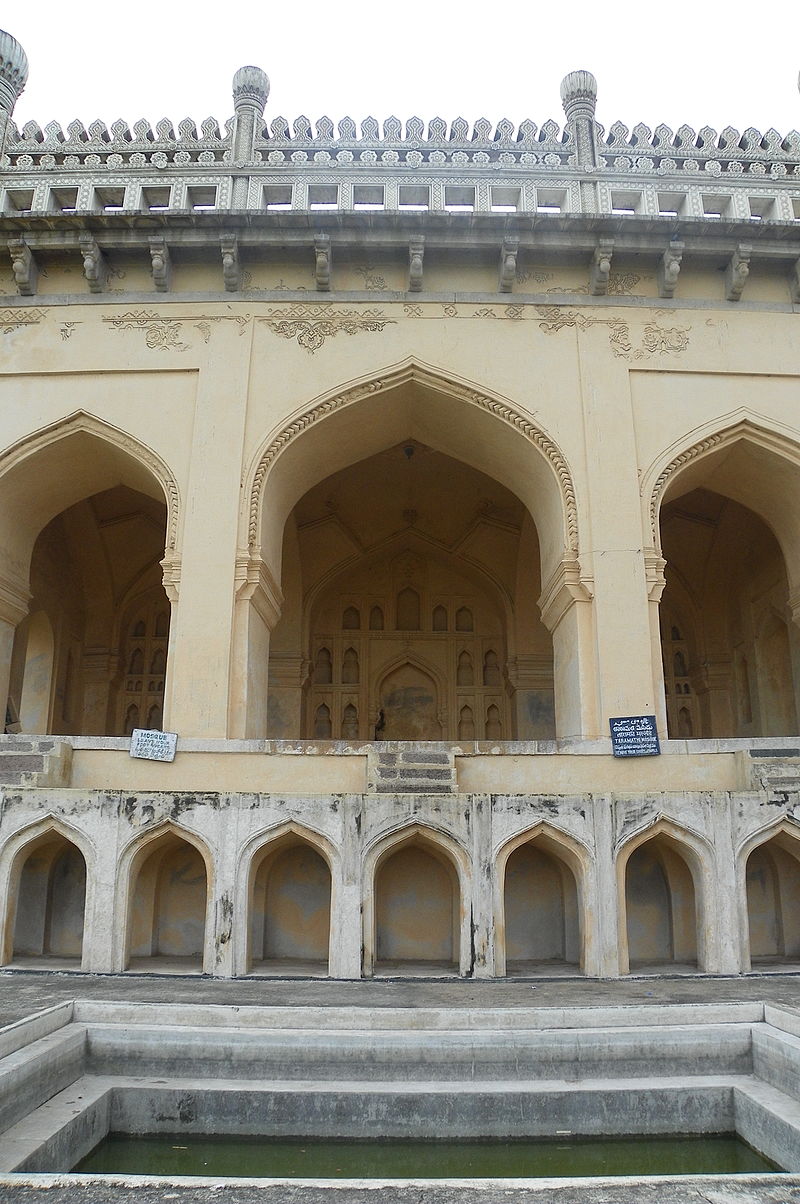
Stucco work, Taramati mosque,Golconda Fort


By Karthik Uppaladhadiam - Own work, CC BY-SA 3.0, https://commons.wikimedia.org/w/index.php?curid=21624821


A different view.JPG


Stucco decoration, Charminar, Hyderabad.


By shash17 - Own work, CC BY-SA 3.0, https://commons.wikimedia.org/w/index.php?curid=28026637

Charminar in detail.jpg


Stucco decoration, Charminar, Hyderabad.


By Varshabhargavi - Own work, CC BY-SA 3.0, https://commons.wikimedia.org/w/index.php?curid=28357121


Char Minar (Details2).jpg


Stucco decoration, Charminar, Hyderabad.


By Navneel neeraj - Own work, CC BY-SA 4.0, https://commons.wikimedia.org/w/index.php?curid=51368363

Image result for charminar images

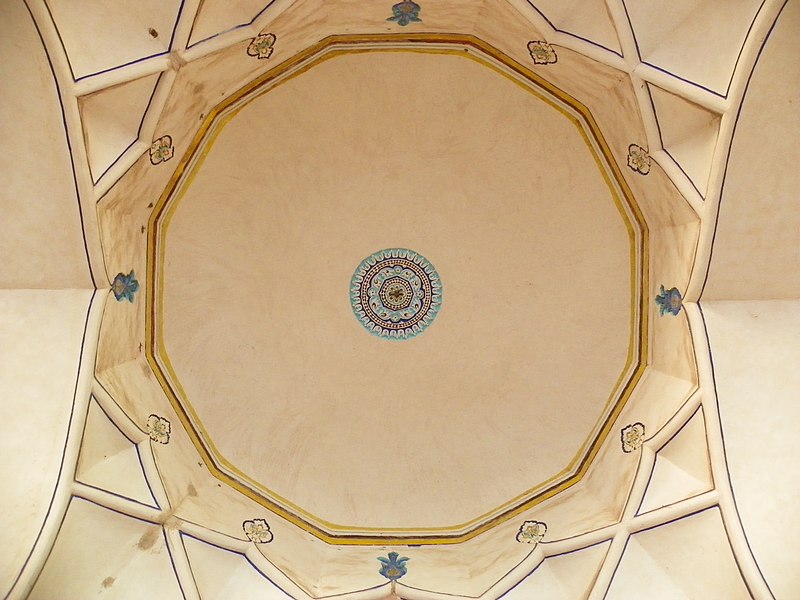
Inside Charminar,Hyderabad.


By Shijiltv (Own work) [CC BY-SA 3.0 (http://creativecommons.org/licenses/by-sa/3.0)], via Wikimedia Commons

Qutub Shahi Tombs 44.JPG

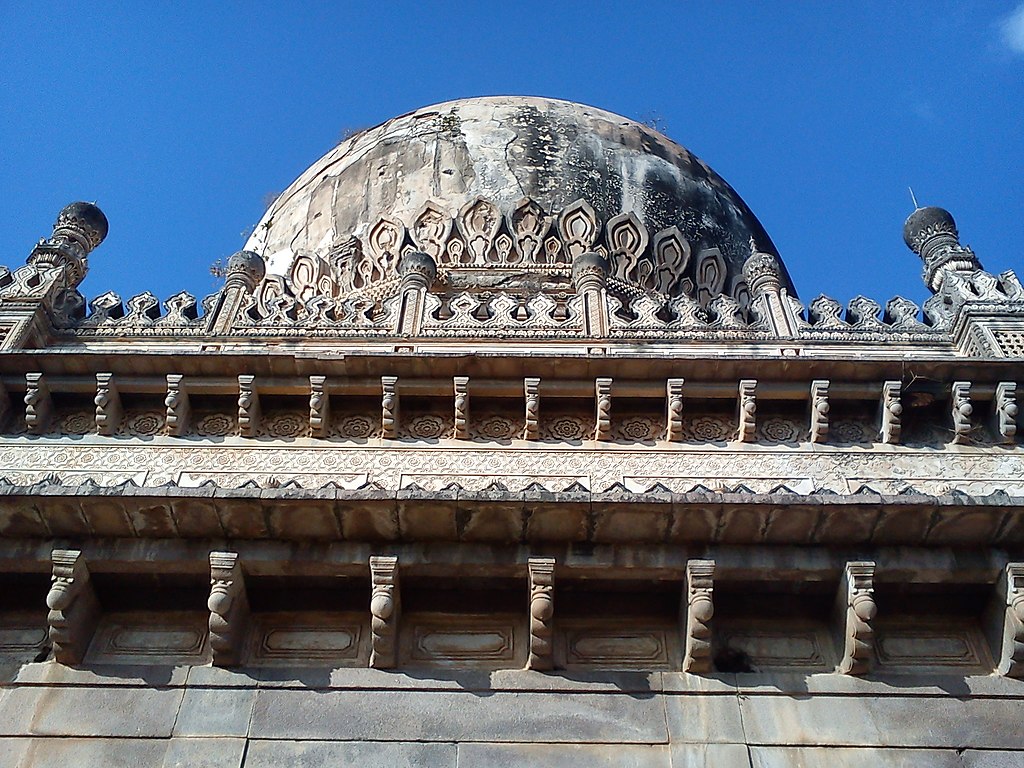
Exterior,Qutub Shahi tomb, Hyderabad.

By Karthik Uppaladhadiam - Own work, CC BY-SA 3.0, https://commons.wikimedia.org/w/index.php?curid=21165075


Threshold of a tomb.jpg

Exterior,Qutub Shahi tomb, Hyderabad.

By Ramesh.mdd - Own work, CC BY-SA 3.0, https://commons.wikimedia.org/w/index.php?curid=27985357


One of the 7 tombs - 4.jpg

Decoration, Qutub Shahi tomb, Hyderabad.

By Vikas jangra2002 - Own work, CC BY-SA 3.0, https://commons.wikimedia.org/w/index.php?curid=21019745

Qutub Shahi Tombs 48.JPG

Exterior,Qutub Shahi tomb, Hyderabad.

By Karthik Uppaladhadiam - Own work, CC BY-SA 3.0, https://commons.wikimedia.org/w/index.php?curid=21165086
Hayat bakshi.... clear picture of the mosque.JPG

Exterior, Hayat Bakshi Begum Mosque,Ibrahimbagh,Hyderabad.


By Bhaskaranaidu - Own work, CC BY-SA 3.0, https://commons.wikimedia.org/w/index.php?curid=21856645

Qutub Shahi Tombs 13.JPG

Stucco decoration, Hayat Bakhshi Begum Mosque,Qutub Shahi Tomb complex, Hyderabad,

By Sthitaprajna - Own work, CC BY-SA 3.0, https://commons.wikimedia.org/w/index.php?curid=21078746

References :
  1. The heritage of the Qutb Shahis of Golconda and Hyderabad/Nayeem,M.A,Hyderabad : Hyderabad Publishers,2006.
  2. Art and architecture of Qutub Shahi times/Meena Kumari, V./Delhi : B. R Publishing Corporation,2014.


Posted by :


Soma Ghosh


Ⓒauthor

Wednesday, 12 April 2017

Golconda paintings: the pichhvai tradition

Golconda paintings : the pichhvai tradition


    The kingdom of Golconda has produced many pichhvai paintings. Originally this art is popular among the Vallabhaite sect in Narthdwara, Rajasthan. Since merchants and traders of this sect came from Rajasthan and Gujarat to the kingdom of Golconda, they brought their art with them. A pichhvai is a decorative hanging in cloth behind the main deity , a form of Krishna; Srinathji, inside the temples.Lord Krishna is a much loved deity among the Hindus in India.He is also an important character in the epic Mahabharata.
  
   The Nathdwara pichhvais depicted Lord Krishna as Srinathji. However the ones produced at Golconda, the depiction is of the Deccan-Maratha style. Though the local artist copied the Rajasthani tradition the Deccan stamp is present.The gopis or cowherd maidens are also slightly different by being more slender and taller. The cows depicted have longer bodies to match the gopis. The gopis are seen in typical Deccan way of dress and jewellery, the foliage is lush,umbrella type with straight tree trunks. The tree is most likely the kadamba tree, associated with Lord Krishna. 

        The pichhvai depicted below is dyed cotton with polychrome and  gold work. It represntative of the Dana-lila in which the gopis have to give a dana or toll to Lord Krishna . It could range from an embrace to a pot of milk ! The gopis are however feigning resistance to Krishna and are look surprised in the scene.The scene is almost mystical with a dream like quality. Peacocks are depicted along with parrots and some other coloured birds. There also is shown the silent showering of fragrant flowers like the chameli and champa from the sky on Krishna and the gopis. On the right below is seen Krishna nad Radha along with the cows who seem to be looking up to them, very much a part of the scene. The cut portion is actually meant for the space where the deity would be placed for worship.


File:'Playful Gifts and other Gopi Scenes', 'pichwai' from Golconda, India, , late 17th century, dyed cotton with polychrome and gold, Honolulu Academy of Arts.jpg

Pichhvai from Golconda, late 17th century, Honolulu Museum of Art,USA.


See page for author [Public domain], via Wikimedia Commons


References :
  1. Art and architecture of Qutub Shahi times/Meena Kumari, V./Delhi : B. R Publishing Corporation,2014.
  2. Golconda and Hyderabad/Safrani,Shehbaz.H,ed.Bombay : Marg Publications,1992.


Posted by :

Soma Ghosh

Ⓒauthor


Saturday, 18 March 2017

Chintz of Golconda : paintings on cloth

Chintz of Golconda : paintings on cloth


        The kingdom of Golconda was a trading centre for diamonds,gems and textiles. They patronised Kalamkari of Machilipatnam, a hand-painted craft during the 16th and 17th centuries. The textiles were made for the Sultanate of Golconda and Iran/Persia.  The designs were customised to the Islamic taste. The art of Kalamkari had evolved wherein the artist works with a pen or qalam; this art flourished in Srikalahasti too where temple hangings were made and in Machilipatnam in South India, as already mentioned. The English called it chintz, the Dutch called sitz,  the Portugese pintado. with time all cloth with patterns came to be known as  chintz. The Srikalahasti kalamkaris had an almost religious identity; scenes from the Hindu epics like Ramayana, Mahabharata  were made for scrolls,chariot banners etc.These were completely hand-worked.

      The kalamkari techinique used the qalam to trace patterns on the cloth. Vegetable and natural dyes extracted from parts of plants like roots,leaves and mineral salts of iron,tin, copper etc. were then filled to create the final product.  The artist was called qalamkar. Kalamkari thus literally means, art work done using a pen. In Machilipatnam hand-carved block prints were used. Finer details were made with qalam.

    The Machilipatnam artists made prayer mats, wall hangings,curtains,cloth belts etc. The designs included the cypress tree,mihrab (prayer niche) of a mosque and animals mentioned in Islamic writings. Floral patterns were much in use for many creations made for both the Europeans,for Persia and the Golconda kingdom. The tree of life is also a common theme. Human figures were also depicted.

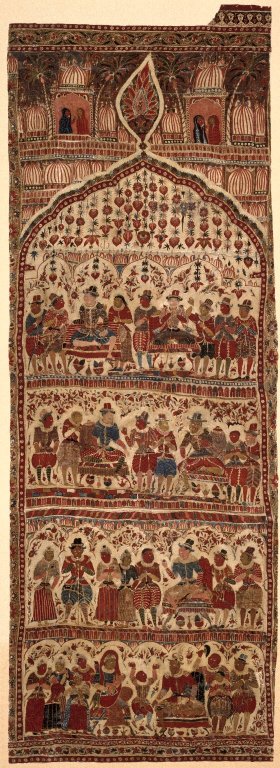
   The wall hanging depicted below has five panels within a floral pattern framework. Floral designs can be seen within the panels too. The scenes depict Europeans and locals.
There are two mandapas on top with two women in each. There are onion shaped domes above the arch; the wall hanging depicts multi-cultural character.


Kalamkari wall hanging, early 17th century.

By Online Collection of Brooklyn Museum; Photo: Brooklyn Museum, 14.719.2_SL1.jpg, Public Domain, https://commons.wikimedia.org/w/index.php?curid=10195568

     The creation below is a qanat or a curtain for a tent, with exquisite floral design. The main design, a flowering plant,  is in the middle with smaller flowers used in the multi-layered frame around it.

Curtain for a palace or royal tent from South India, Doris Duke Foundation for Islamic Art.JPG

Curtain for a royal tent (qanat) from Andhra Pradesh or Tamil Nadu region, 1665.

By Hiart - Own work, CC0, https://commons.wikimedia.org/w/index.php?curid=53643424


References :


  1. wikipedia.org
  2. The heritage of the Qutb Shahis of Golconda and Hyderabad/Nayeem,M.A,Hyderabad : Hyderabad Publishers,2006.


Posted by :


Soma Ghosh


©author


Saturday, 21 January 2017

Mecca Masjid : grand mosque of Hyderabad


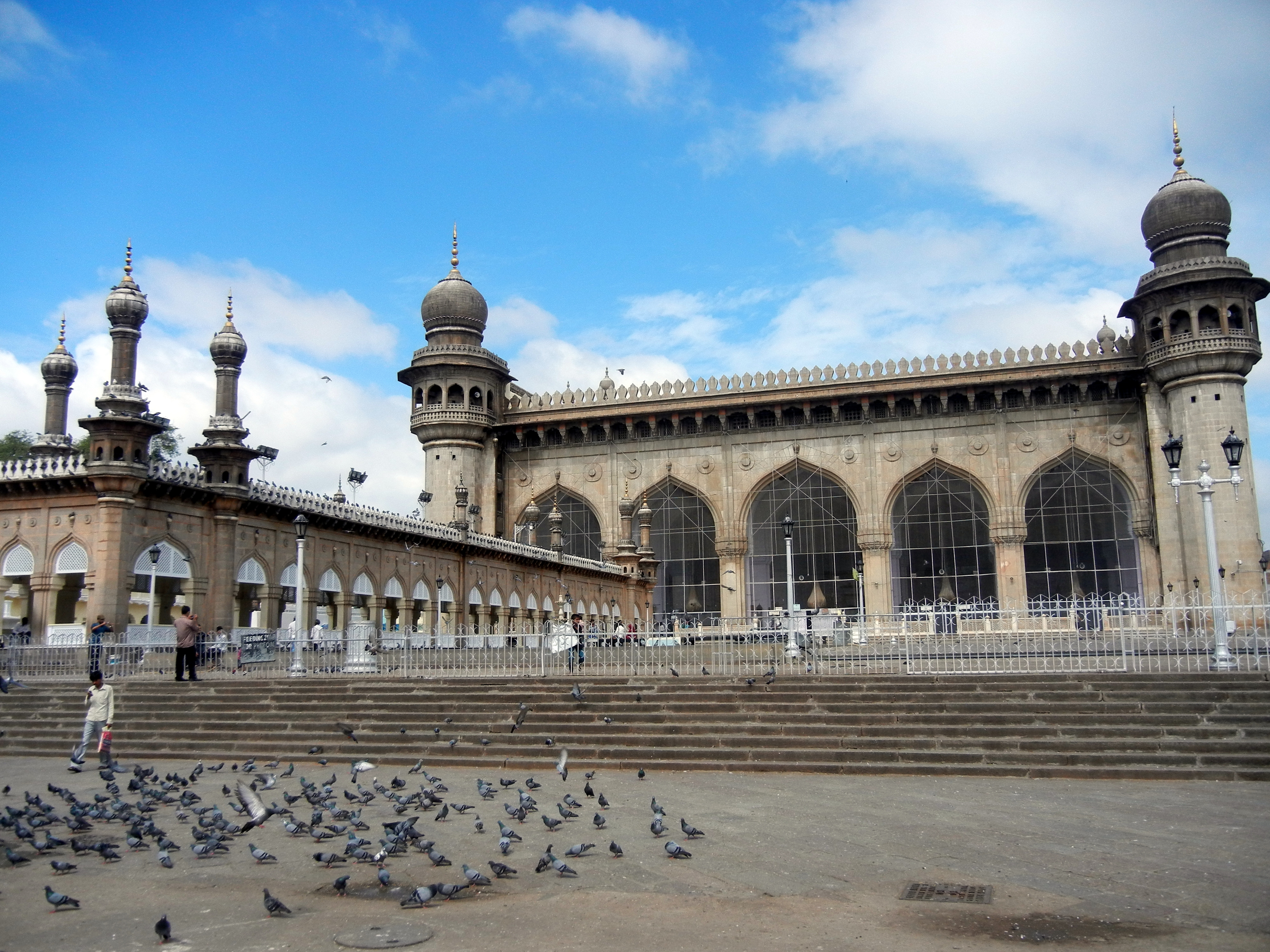
     The Mecca Masjid is 100 yards south-west of the Charminar.The Mecca Masjid at Hyderabad is one of the largest mosques in the south of India; it can accommodate 10,000 worshippers at prayers. Named as Bait-ul Atiq by Sultan Mohammed Qutub Shah,construction began under him in 1614 with 8000 workers under the supervision of Daroga Mir Faizullah Baig and Choudhary Rangaih; however it was not completed until 1693 by Aurangzeb. It was constructed from huge granite boulders that were hewn locally. Small red bricks made from the earth brought from Mecca  are positioned above the central arch. The mosque came to be thence known as Mecca Masjid.
     
     The mosque is patterned on the Grand mosque at Mecca. The hall is 67 metres by 54 metres and 23 metres high. The roof is supported by five arches each on three sides. The mehrab is on the western side. 

     Jean Baptiste Tavernier, a merchant traveller to Hyderabad in the 17th century says that the stone for the prayer-niche  was hewn out of a quarry and several hundred pairs of bullocks took it to the construction site.  The mosque contains the tombs of the Nizams of the Asaf Jahi dynasty from 1803 onwards. 


File:Mecca Masjid, Hyderabad, India.jpg

Mecca Masjid , image from the 1890s.

By Lala Deen Dayal [Public domain or Public domain], via Wikimedia Commons

           The main facade has  five arched entrances. The prayer hall contains five aisles, three bays deep. The circular corner minars, with octagonal balconies, are small in height; they were never carried above parapet level. The capping domes were added later by the Mughals.

Image result for mecca masjid photos

By Sooraj (Own work) [CC BY-SA 3.0 (http://creativecommons.org/licenses/by-sa/3.0)], via Wikimedia Commons

Related image

By Aruna.bommana (Own work) [CC BY-SA 3.0 (http://creativecommons.org/licenses/by-sa/3.0)], via Wikimedia Commons

Image result for mecca masjid photos

By KrishnaVikas (clickbyviks) (Own work) [CC BY-SA 3.0 (http://creativecommons.org/licenses/by-sa/3.0)], via Wikimedia Commons


Image result for mecca masjid photos

By Shilpa Venkat (Own work) [CC BY-SA 3.0 (http://creativecommons.org/licenses/by-sa/3.0)], via Wikimedia Commons
Image result for mecca masjid photos

By Habeeb MD [CC BY 2.0 (http://creativecommons.org/licenses/by/2.0)], via Wikimedia Commons


References :


  • Hyderabad 400 years/Raza Ali Khan,Hyderabad : Zenith Services,1990.
  • wikipedia.org


Posted by :


Soma Ghosh


©author


Thursday, 8 December 2016

Qutub Shahi tombs : grandeur revisited


   Golconda was an important sultanate of medieval Deccan and the rulers were   the Qutub Shahis who first ruled from Golconda and later Hyderabad.

       The eight sultans of  the Qutub Shahi dynasty were : Sultan Quli Qutb-ul-Mulk (1512–      1543),Jamsheed Quli Qutb Shah (1543–1550),Subhan Quli Qutb Shah (1550),Ibrahim Quli    Qutb Shah (1550–1580),Muhammad Quli Qutb Shah (1580–1612),Sultan Muhammad Qutb      Shah (1612–1626),Abdullah Qutb Shah (1626–1672),Abul Hasan Qutb Shah (1672–1686).

  The tombs of the Sultans along with other important people from the family and associates are at a royal cemetery or tomb complex at Ibrahimbagh near the Golconda Fort. The tombs were built by various kings. The last Sultan is not buried here as he was sent to Daulatabad after the Mughal siege.

    The architecture is a beautiful blend of Persian , Indian and Pashtun influences. The tombs are on a raised platform having domes and surrounded by arches. Surrounding the tombs are gardens. The tombs were much venerated during the Qutub Shahi times. The tombs of the sultans had golden spires over them. People would read from the holy Quran  which used to be kept on pedestals.

Sultan Quli's tomb has the inscription Bade Malik (Big Master) as he was addressed by that name. The tomb is on an elevated surface and the structure is a domed one. There are three graves in this tomb and twenty one more  on the terrace outside.


Sultan Quli Qutub Shah's tomb, 1543.

By Bernard Gagnon - Own work, CC BY-SA 3.0, https://commons.wikimedia.org/w/index.php?curid=34550873

The tomb of Sultan Jamsheed Quli, fashioned from black basalt, is a double height octagonal chamber with arches and projecting balconies. The balconies have rich ornamental balustrades.

File:Qutub Shahi Tombs 96.JPG

Sultan Jamsheed Quli's tomb,1550.

By Karthik Uppaladhadiam (Own work) [CC BY-SA 3.0 (http://creativecommons.org/licenses/by-sa/3.0)], via Wikimedia Commons

    After the reign changed , the tombs did not get as much attention. In the beginning of 19th century, Sir Salar Jung ordered for their restoration. He was an important prime-minister of Hyderabad-Deccan during the Asaf Jahi rule (1724-1948).

     The tomb of Sultan Ibrahim Quli Qutub Shah has two graves in the main chamber and another sixteen on the terrace most probably of his children.


Sultan Ibrahim Quli Qutub Shah's tomb,1580.

    https://www.flickr.com/photos/nagarjun/6781775423

        Mohammad Quli, who was the fifth Sultan founded the city of Hyderabad. He was        a poet,  a great builder who built palaces, monuments like the Charminar , mosques          and laid out many gardens. His mausoleum is raised on a vaulted structure housing the      grave. The bulbous dome has a petalled base.

Image result for qutub shahi tombs images


Mohammad Quli Qutub Shah's tomb,1611.


By Bernard Gagnon (Own work) [GFDL (http://www.gnu.org/copyleft/fdl.html) or CC BY-SA 3.0 (http://creativecommons.org/licenses/by-sa/3.0)], via Wikimedia Commons


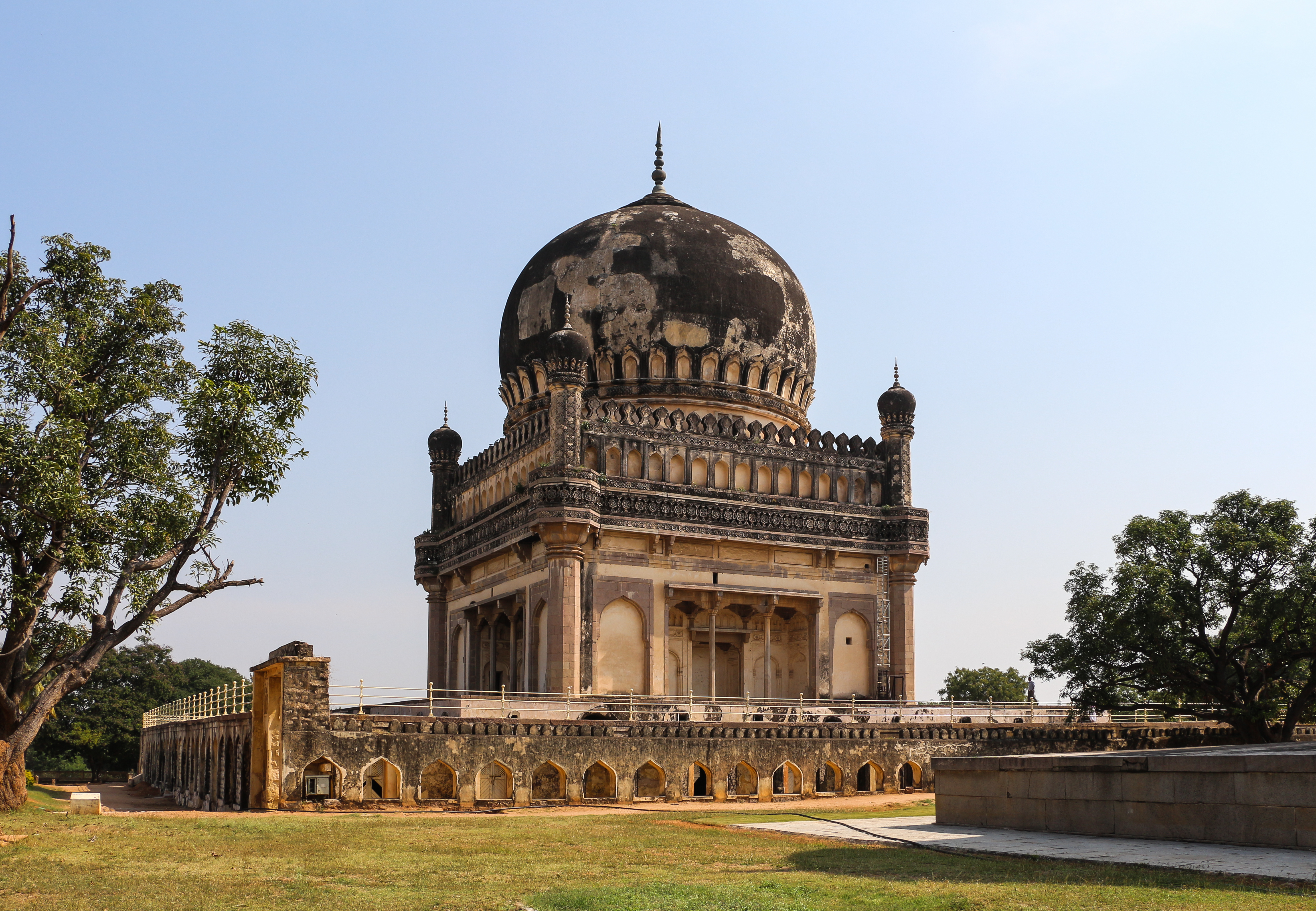
   Sultan Mohammad Qutub Shah's mausoleum has a circular dome and the central chamber  is surrrounded by an arcaded gallery with seven exits or openings. The upper storey has five recesses.

Tomb of Muhammad Qutb Shah in Hyderabad W IMG 4636.jpg


Tomb of Muhammad Qutub Shah,1626.


By J.M.Garg - Own work, GFDL, https://commons.wikimedia.org/w/index.php?curid=6677785

    Hayat Bakshi Begum was the daughter of the founder of Hyderabad city, Mohammad Quli, the fifth sultan, wife of Mohammad Qutb Shah and mother of Sultan Abdullah Qutb Shah, the seventh ruler. She was fondly called Ma-saheba.  The tomb is ornate and its parapet displays a frieze of flowers. Arcaded galleries protrude from the corner minarets.

Mausoleum of Hayat Bakshi Begum.jpg


Hayat Bakshi's tomb,1666.


By Khadeeja Henna - Own work, CC BY-SA 4.0, https://commons.wikimedia.org/w/index.php?curid=51876697


Archways at the Qutub Shahi tombs.


By McKay Savage from London, UK - India - Hyderabad - 110 - archways at the Qutub Shahi Tombs, CC BY 2.0, https://commons.wikimedia.org/w/index.php?curid=23465426

     The tomb of  Sultan Subhan Ali, fondly called Chhote Malik (Little Master)lies near his father Jamsheed Quli's tomb. The other tombs are of the physicians or hakims of the Sultan Abdullah Qutub Shah, Nizamuddin Ahmed Jeelani and Abdul Jabbar Jeelani, tomb of Neknaam Khan who served in Sultan Abdullah's army, tomb of Fatima Sultan sister of Mohammad Qutub Shah. and Kulsoom , his grand-daughter and courtesans Taramati and Premamati.

    An unfinished tomb  started by Sultan Abul Hasan Tana Shah, houses the grave of Mir Ahmed, son of Sultan Abdullah's son-in-law. The royal tomb complex also has the mosque of Hayat Bakshi Begum and the dargah of Hazrat Hussain Shah Wali,Sufi saint and builder of the Hussain Sagar at Hyderabad. A mortuary bath in Turkish style exists opposite the tomb of Mohammad Quli. 

The tomb complex was once called Lagar-e-faiz-athar where songs , dances and the occasional play was staged.The sun still sets and the silhouette of the tombs are seen against the evening sky; the breeze blows whispering tales of centuries gone by.


Enamelled tilework decaration, Hayat Bakshi Begum's masjid, tomb complex.

https://www.flickr.com/photos/nagarjun/6781313761 (Image taken by  Nagarjun Kandukuru)


The royal tombs of Golconda 

I muse among these silent fanes
Whose spacious darkness guards your dust
around me sleep the hoary plains
That hold your ancient wars in trust
I pause,my dreaming spirit hears,
Across the wind's unquiet tides,
The glimmering music of your spears
The laughter of your royal brides,
The royal tombs of Golconda
In vain o Kings,doth time aspire
to make your names oblivion's sport
While yonder hill wears like a tier
The ruined grandeur of your fort
Though centuries falter and decline
Your proven strongholds will remain
Embodied memories of your line
Incarnate legends of your reign.
O Queens, in vain old Fate decreed
Your flower-like bodies to the tomb;
Death is in truth the vital seed
Of your imperishable bloom
Each new-born year the bulbuls sing
Their songs of your renascent loves;
Your beauty wakens with the spring
To kindle these pomegranate groves.

                                                             Sarojini Naidu


References :


  • The art and architecture of the Deccan Sultanates/George Michell and Mark Zebrowski,Cambridge : Cambridge University Press,1999.
  • wikipedia.org
  • poetryarchive.com


Posted by : 

Soma Ghosh


© author


Tuesday, 29 November 2016

Golconda in art : images of royalty


       Golconda was one among the Sultanates of the Deccan during 16th -18th century India. Known all over the world for its fortifications, big arsenals, ruined palaces, gardens, fountains, pools, mosques and terraces and leader in diamond trade with expertise in cutting an polishing the stone; as it was available in the mines in the bed of the river Krishna. The hill fortress at a height of 400 feet above the ground, housed the king's soldiers, harem, treasury, courtiers and followers. The area within the fort also housed a population which grew too large and a new capital for the kingdom was made at Hyderabad by Sultan Mohammad Quli in 1591.

The kingdom extended over the Southern peninsula starting from the Godavari river upto the Cape Comorin and up to the Indian Ocean in the east.

The art of the Golconda kingdom and some of it's representations are elucidated for an idea of the art of the Golconda and Hyderabad school of Deccani painting. 

Deccani painting evolved when the Deccan Sultanates namely, Ahmadnagar, Bijapur and Golconda started producing paintings of great quality. There was a strong Persian influence on their art. However their art was distinct and has earned itself a unique place in the history of Indian painting. Deccani paintings were not dated or inscribed with the name of the painter as the Mughal ones. 

  Coming to the subject at hand, namely Golconda, it can be said that the Persianate character of their painting can be attributed to the fact that the first king, Sultan Quli had migrated from Persia to Bidar in 1478. The Qutub Shahis maintained close ties; which included matrimony with the Safavids and patronised poets and painters from Persia.

The typicality of Golconda paintings lies in its opulence and vitality which has an Indian flavour of richness.

File:Abdullah Qutb Shah.jpg
Portrait, Sultan Abdullah Qutub Shah of Golconda.

By Unknown - [flickr http://www.flickr.com/photos/thesandiegomuseumofartcollection/6125086876/in/photostream/], CC BY-SA 3.0, https://commons.wikimedia.org/w/index.php?curid=24570593

      The Kulliyat-e- Mohammad Quli Qutub Shah , a collection of the Sultan's poetry contains many illustrations which depict the Golconda school of painting. Iridiscent colours including bluish-purple, salmon-red,pricked gold surfaces are typically Golconda style.There are other astonishing and splendorous  examples too.

File:Illuminated Manuscript of the History of the Qutb Shahi Sultans of Golconda LACMA M.89.159.4 (2 of 5).jpg

Illuminated Manuscript of the History of the Qutb Shahi Sultans of Golconda LACMA , 17th century.

https://commons.wikimedia.org/wiki/File%3AIlluminated_Manuscript_of_the_History_of_the_Qutb_Shahi_Sultans_of_Golconda_LACMA_M.89.159.4_(2_of_5).jpg
See page for author [Public domain], via Wikimedia Commons

File:Illuminated Manuscript of the History of the Qutb Shahi Sultans of Golconda LACMA M.89.159.4 (3 of 5).jpg

Illuminated Manuscript of the History of the Qutb Shahi Sultans of Golconda LACMA , 17th century.

https://commons.wikimedia.org/wiki/File%3AIlluminated_Manuscript_of_the_History_of_the_Qutb_Shahi_Sultans_of_Golconda_LACMA_M.89.159.4_(3_of_5).jpgSee page for author [Public domain], via Wikimedia Commons


Illuminated Manuscript of the History of the Qutb Shahi Sultans of Golconda LACMA M.89.159.4 (1 of 5).jpg

Illuminated Manuscript of the History of the Qutb Shahi Sultans of Golconda,LACMA , 17th century.

By Image: http://collections.lacma.org/sites/default/files/remote_images/piction/ma-2794559-O3.jpgGallery: http://collections.lacma.org/node/177837, Public Domain, https://commons.wikimedia.org/w/index.php?curid=27254257

Illuminated Manuscript of the History of the Qutb Shahi Sultans of Golconda LACMA M.89.159.4 (4 of 5).jpg

Illuminated Manuscript of the History of the Qutb Shahi Sultans of Golconda LACMA , 17th century

By Image: http://collections.lacma.org/sites/default/files/remote_images/piction/ma-2794553-O3.jpgGallery: http://collections.lacma.org/node/177837, Public Domain, https://commons.wikimedia.org/w/index.php?curid=27254284


    After the death of Sultan Abdullah Qutub Shah. Abul Hasan ascended the throne. He was the son-in-law, ie. husband of the second daughter of Abdullah Qutub Shah. He was a follower of Shah Raju, and used to live in Gulbarga. Both of them came to Hyderabad. Shah Raju was a mystic and influenced the new court. Madanna, a Hindu became prime -minister and farmans (royal diktats) began to be issued in both Telugu and Persian. Urdu, Telugu and Arabic literature was patronised. There were influences in art too. Abul Hasan was nicknamed Tana Shah meaning king of taste. Many paintings of the Golconda school can be attributed to his time. The school was kept alive even after the defeat of Tana Shah in 1687 to Aurangzeb.The Mughal governors and local aristocracy engaged painters to work for them.


Visit of Sufi singer Shir Muhammad to Abul Hasan Qutb Shah, later Golconda school,1720.
By Govardhan II - http://expositions.bnf.fr/inde/grand/exp_031.htm, Public Domain, https://commons.wikimedia.org/w/index.php?curid=19082077


Akbar Shah, son of the Deccani saint Shah Raju (6124544567).jpg


Akbar Shah, Son of saint Shah Raju,17th century.


By thesandiegomuseumofartcollection - Flickr, Public Domain, https://commons.wikimedia.org/w/index.php?curid=38309515


Lady with the Myna Bird.jpg

Lady with a myna bird, early 17th century,Golconda.

By Deccan School - http://www.harekrsna.com/sun/features/12-11/features2319.htm, Public Domain, https://commons.wikimedia.org/w/index.php?curid=21077969

Durbar of Eighteen Princes.jpg

Durbar of eighteen princes, Qutub Shahi dynasty,17th century.

By Unknown - http://www.asia.si.edu/collections/singleObject.cfm?ObjectNumber=F1997.29, Public Domain, https://commons.wikimedia.org/w/index.php?curid=24823741
References :


  • Khan, Nazirul-Islam/Guide to Golconda, Bombay : Thacker & Company Limited,1941.
  • Zebrowski, Mark/Deccani painting, New Delhi : Roli Books,1983.


Posted by :


Soma Ghosh


© author