Saturday, 24 June 2017

Nizam VI : Mir Mahboob Ali Khan

Nizam VI : Mir Mahboob Ali Khan,people's beloved


        Born in 1866 at Purani Haveli,Hyderabad, Mir Mahboob Ali Khan was the 6th Nizam of Hyderabad State. He ruled between 1869 to 1911. Hw was the son of Afzal-ud-dowlah, Nizam V. His father died when he was only 2 years and seven months old. He was installed on the throne but with two regents Mir Turab Ali Khan, Salar Jung I and Nawab Rasheeduddin Khan. However Nawab Rasheeduddin Khan died in December 1881 and Salar Jung I became the sole regent.

File:The Young Nizam Mehboob Ali Khan of Hyderabad, With Attendants, 1870s.jpg

Young Mahboob Ali Khan with others,photograph,1870s.

By Nawab Mohammed Azeezuddin Khan (son of Nawab Lateefudin Khan) (Scan of the original photograph) [Public domain or Public domain], via Wikimedia Commons


   Under the guidance of Salar Jung I, Capt. John Clark was appointed to tutor him. Teachers of Persian,Arabic and Urdu also tutored him. He grew up to be a respected leader and was called Mahboob Ali Pasha.  His doctor was Dr.Abdul Hussain who was later called Arastu Yar Jung. Nizam VI was a ruler believed to have mystic powers who could cure snake bites. He knew Urdu,Persian and Telugu and composed poetry. 

   Mahboob Ali Pasha led a flamboyant lifestyle and had lots of clothes and cars. He owned sherwanis, coats,shirts footwear,walking-sticks and perfumes. He purchased a diamond which became famous as the Jacob diamond. He was very helpful to the people during the floods of 1908 at Hyderabad and opened the palace gates for the affected. He died in August 1911.

    During his lifetime he had acquired many titles : as a young prince he was Sahibzada Mir Mahboob Ali Khan Siddiqui Bahadur. He was llater on Rustam-i-dauran,Asaf Jah Vi,Nizam-ul-mulk,Sipah-salar, Lieutenant General,Fateh Jung GCSI,GCB,Nizam of Hyderabad among others.


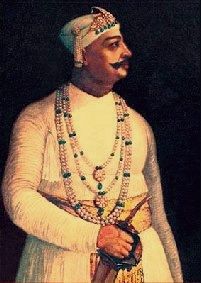
File:Asaf Jah VI.jpg


Nizam VI, Mir Mahboob Ali Khan.


See page for author [Public domain], via Wikimedia Commons
Published in 1889.(Illustrated London News)


Image result for Nizam VI 

Coat of arms, 1893.


By Sir Roper Lethbridge (Golden Book of India, 1893) [Public domain], via Wikimedia Commons


File:Franz Ferdinand by Dayal, 1893.jpg


Archduke Franz Ferdinand with Nizam VI during visit, January 1893, Hyderabad.


By Lala Deen Dayal, State Photographer (Dorotheum) [Public domain], via Wikimedia Commons


References :

  • Hyderabad : a city  in history/Khan, Raza Ali, Hyderabad : Zenith Services,1990.
  • wikipedia.org

Posted by

Soma Ghosh


Ⓒ author


Thursday, 15 June 2017

Asaf Jah V : the fifth Nizam of Hyderabad

Asaf Jah V : the fifth Nizam of Hyderabad

    Mir Tahniyat Ali Khan, Afzal-ud-dowlah born in 1827, Asaf Jah V was the fifth Nizam after the death of Nizam IV, Kir Farkhnunda Ali Khan. He ascended the throne after the  Indian revolt of 1857. In 1861 he was appointed Commander Great Knight of the Order of the Star of India by the Queen.

    He had Salar Jung I as his prime minister who transformed the administration whose finances were under control. The state introduced modern accounting and began functioning in a scientific and modern way.


During his reign, the 1857 mutiny broke out, The insurgent Rohillas attacked the Residency, the Resident was Cuthbert Davidson, however the Nizam administration thwarted the efforts of the mutineers with the help of Salar Jung I. The Nizam became the 'Faithful ally of the British Government'. The building of the Chowmahalla Palace was completed in his rule.He ruled for 12 years. A bridge over the river Musi  and a mosque at Afzalgunj (named after him) was built during his reign.  He died in 1869 and was buried at the Mecca Masjid complex at Hyderabad. He left behind an infant son who was only three years old, Mir Mahboob Ali Khan.

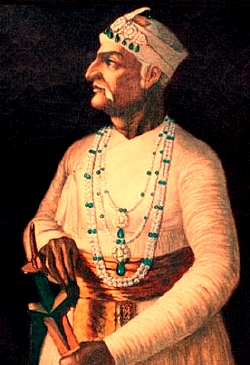
Afzal ud-Daula.jpg

Nizam V,Afzal-ud-dowlah.


Av Ukjent - http://www.royalark.net/India/hyder9.htm, Offentlig eiendom, https://commons.wikimedia.org/w/index.php?curid=29052000


File:The British Residency at Hyderabad.jpg

Nizam V visiting the Residency,1830, drawing.

By Robert Montgomery Martin [Public domain], via Wikimedia Commons


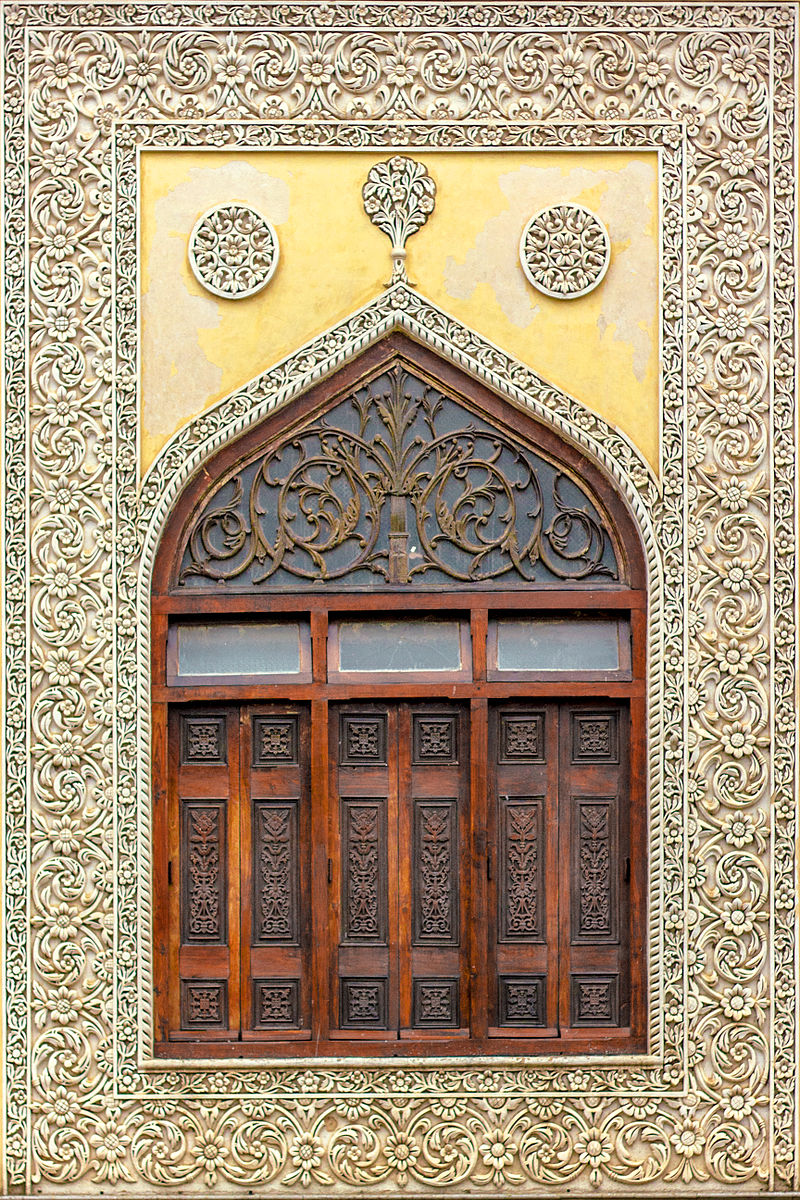
Window with intricate stucco work, Chowmahalla Palace,Hyderabad.

By Rohit Sarma - Own work, CC BY-SA 3.0, https://commons.wikimedia.org/w/index.php?curid=27575021


Chowmahalla Palace, Hyderabad.

By Lala Deen Dayal (1844-1905) - British Library, Public Domain, https://commons.wikimedia.org/w/index.php?curid=3711831


File:His Highness the Nizam of Hyderabad.jpg

Mir Mahboob Ali Khan.

By Illustrated London News [Public domain], via Wikimedia Commons

References :

  • Hyderabad : a city  in history/Khan, Raza Ali, Hyderabad : Zenith Services,1990.
  • wikipedia.org

Posted by

Soma Ghosh


Ⓒ author


Monday, 12 June 2017

Asaf Jah IV : the fourth Nizam of Hyderabad

Asaf Jah IV : the fourth Nizam of Hyderabad


      Nasir-ud-dawlah Mir Farkhunda Ali Khan Siddiqui Bayafandi born in 1794, succeeded the third Nizam, Sikandar Jah who died in May 1829 at age 62, to become the IVth Asaf Jahi ruler of the Hyderabad state.  He ruled the state between 1829 and 1857. He had an able prime minister first in Siraj-ul-Mulk during 1829 to a part of 1853 and then in Nawab Mir Turab Ali Khan, Salar Jung I  from later 1853Salar Jung I brought the state out of the financial mess and introduced many reforms for better administration. The Nizam IV had to cede Berar and some border districts to the British. However the administration had more transperency  and was revamped during his rule; the state was divide into 16 districts  each headed by a taluqdar. The state infrastructure improved during his rule. Education got an impetus and new schools were opened. 

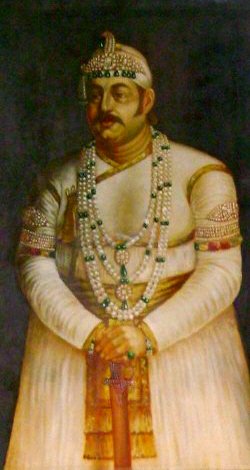
     The portrait below depicts the fourth Nizam wearing a head ornament and pearl-strings with precious stones depicting his high status as ruler.

Nasir-ud-dawlah, Nizam of Hyderabad 1794-1857.jpg

Asaf Jah IV, Nasir-ud-dowla, painting, 19th century.

By Unknown - Christie's, Public Domain, https://commons.wikimedia.org/w/index.php?curid=12143877


Nawab Mir Turab Ali Khan, Salar Jung I, Prime minister,photograph,19th century.

By undated photo - http://www.columbia.edu/itc/mealac/pritchett/00routesdata/1700_1799/hyderabad/asifjah6/asifjah6.html, Public Domain, https://commons.wikimedia.org/w/index.php?curid=19107368


References :

  • Hyderabad : a city  in history/Khan, Raza Ali, Hyderabad : Zenith Services,1990.
  • wikipedia.org

Posted by

Soma Ghosh


Ⓒ author

Wednesday, 7 June 2017

Asaf Jah III : the third Nizam

 Sikandar Jah: the third Nizam of Hyderabad


    Sikandar Jah ascended the throne after the death of Nizam Ali Khan in August 1803 at the age of 72. Born in November 1768 to Nizam Ali Khan and Tahniyatunnissa Begum at the Chowmahalla palace in Hyderabad, he was Nawab Mir Akbar Ali Khan Siddiqui Bafayandi Bahadur Sikander Jah Asaf Jah III . The war with the Marathas was over when he became ruler, He appointed Mir Alam as his prime minister. Mir Alam maintained good relations with the British. However he died in 1808 and his son Munir-ul-Mulk took aver as prime minister. A reservoir built by him,south of the Musi river is named Mir Alam Tank in Hyderabad. It was a source for drinking water at the time.

 The finances of Hyderabad were in a poor shape due to heavy borrowing and overspending, during the reign of Nizam III. Sikandar Jah ruled for 26 years and died in May 1829. He established a Cantonment near Hyderabad which was called Secunderabad after him. Today it is a bustling twin of Hyderabad and together are called twin-cities with the Hussain Sagar separating them, connected by the Tank Bund Road.


File:Sikandar Jah.jpg

Sikandar Jah,Asaf Jah III.

See page for author [Public domain], via Wikimedia Commons


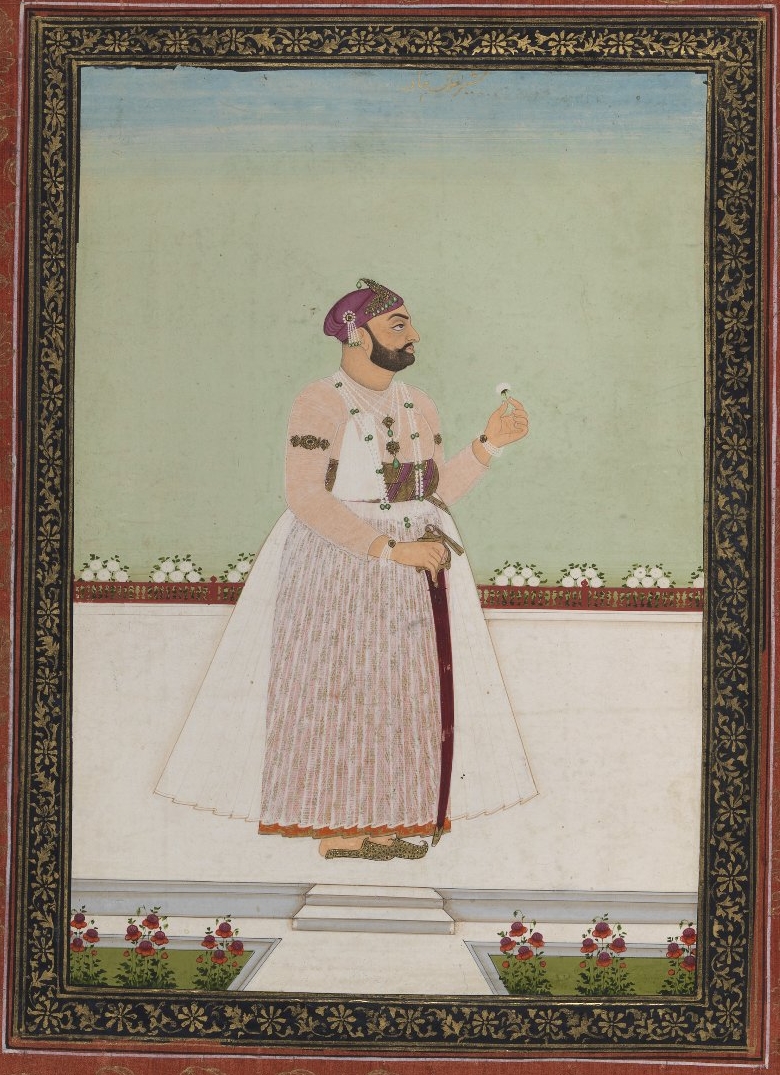
File:Nizam Sikandar Jah (r.1803-29).jpg

Nizam Mir Akbar Ali Khan Sikandar Jah,  sitting on a carpet in a garden in front of a terrace, miniature paintings(two portraits),Hyderabad, 1808-16

By Hyderabad, [Public domain], via Wikimedia Commons

File:Nawab Mir 'Alam Bahadur and Raja Chandu Lal Bahadur (6124550671).jpg

Mir Alam Bahadur and Raja Chandulal,painting, 1800.

By English: thesandiegomuseumofartcollection (Flickr) [Public domain], via Wikimedia Commons


 Munir al-Mulk Bahadur, painting,19th century.

By Unknown - Online Collection of Brooklyn Museum; Photo: Brooklyn Museum, 59.206.1_IMLS_PS3.jpg, Public Domain, https://commons.wikimedia.org/w/index.php?curid=10965745


References :

  • Hyderabad : a city  in history/Khan, Raza Ali, Hyderabad : Zenith Services,1990.
  • wikipedia.org

Posted by

Soma Ghosh

Ⓒ author


Tuesday, 30 May 2017

Asaf Jah II : the second Nizam of Hyderabad

Asaf Jah II : the second Nizam of Hyderabad


     Asaf Jah I ruled the state of Deccan as an able statesman. He died at Burhanpur in 1748 at the age of 78. After he died there was a struggle for the throne. The following thirteen years saw different rulers for short spans of time. During this time foreign powers had started gaining some control of Indian affairs. The second son of Asaf Jah I, Nasir Jung was supported by the British. The grandson Muzaffar Jung, his grandson was supported by the French. Nasir Jung succeeded in occupying the throne for some time, but but was killed at Arcot in 1750 in an encounter with the French. Muzaffar Jung occupied the throne but was murdered the following year. Then his son Salabat Jung occupied the throne. He was dethroned by his brother Nizam ali Khan in 1762. He died in confinement at Bidar in 1763.

     Nizam Ali Khan born in 1734, was Nawab Mir Nizam Ali Khan Siddiqui Bayafandi Bahadur Asaf Jah II, became ruler in 1762 and ruled for forty years. Initially he was the faujdar of the Deccan in 1759. He had earned a good reputation by fighting the Marathas. However, he faced some defeat at the Battle of Udgir after the assasination of Alamgir II. Mughal Emperor Shah Alam II made him subahdar of the Deccan after Nizam Ali Khan siezed the Bidar Fort and confined Salabat Jung.In 1763 the Nizam was defeated by Madhavrao II at the Battle of Rakshabhuvan  and entered in to an agreement with the Marathas. His military guide was Monsieur Raymond, a French General in his army. He was the founder of the Gunfoundry in Hyderabad. Son of a merchant,he had come to India along with his brother from France in 1775. He became a soldier under General Bussy at Pondicherry.  However later in 1786 he met the Nizam and joined as a soldier. Again in 1795 at the Battle of Kharda the Nizam  lost  to the Marathas and had to cede Daulatabad,Aurangabad and Sholapur. Monsieur Raymond became Amar-e-jinsi or Comptroller of Ordinance in 1796.  Monsieur Raymond died mysteriously  in 1798 when he was a commander of 14,000 men. He was fondly called Mussa Ram or Mussa Rahim (Monsieur Raymond ) and the area where his tomb is located is called Moosarambagh at Hyderabad.


Nizam Ali Khan, Asaf Jah II, Nizam of Hyderabad.jpg

Nizam Ali Khan, painting, late 18th century,Hyderabad.

Av Ukjent - The San Diego Museum of Art, Offentlig eiendom, https://commons.wikimedia.org/w/index.php?curid=28942229


Asaf Jah II,portrait.

By Unknown - hyder5, Public Domain, https://commons.wikimedia.org/w/index.php?curid=27106739


   Later the Nizam Ali Khan entered in to an alliance with the British East India Company and Hyderabad became a large princely state within the British Raj. Nizam Ali Khan, Asaf Jah II died in 1803 at Chowmahalla Palace at Hyderabad.

File:Chowmahalla palace,fountain.jpg

Chowmahalla Palace, Hyderabad.

By Arshad Majeed (Own work) [CC BY-SA 3.0 (http://creativecommons.org/licenses/by-sa/3.0)], via Wikimedia Commons

Gunfoundry.jpg

Top ka sancha or Gunfoundry at Hyderabad.

By MIT Libraries - http://dome.mit.edu/handle/1721.3/20032, Public Domain, https://commons.wikimedia.org/w/index.php?curid=25279442


Monsieur Raymond's tomb,Hyderabad.

By Bhaskaranaidu - Own work, CC BY-SA 3.0, https://commons.wikimedia.org/w/index.php?curid=21465339


References :

  • Hyderabad : a city  in history/Khan, Raza Ali, Hyderabad : Zenith Services,1990.
  • wikipedia.org

Posted by

Soma Ghosh

Ⓒ author


Friday, 26 May 2017

Hyderabad's history :the Mughal connection


Hyderabad's history : the Mughal connection


         The Mughals tried to capture Golconda on two occasions. First in the year 1656, and then in the year 1687. Aurangzeb attacked  Golconda for the first time during the reign of Sultan Abdullah Qutub Shah. At that time his prime minister was Mir Muhanmmad Sayeed Mir Jumla. He was a very able person and under him a large part of the Karnatak province was annexed to the Golconda kingdom. However due to certain circumstances,  son of Mir Jumla was imprisoned by the Sultan. This led to a misunderstanding between them. Mir Jumla then appealed to Aurangzeb for release of his son. This gave him an opportunity to attack Golconda.

 Sultan Abdullah had to release Mir Jumla's son and pay a heavy indemnity in offer for peace. He also gave his daughter in marriage to Aurangzeb's eldest son.

 Sultan Abdullah Qutub Shah died in 1672. He was succeeded by his son-in-law Abul Hassan. During his rule Aurangzeb again attacked Golconda and was victorious in 1687. The siege had lasted for 8 months. Sultan Abul Hasan Tana Shah was taken prisoner and kept at Daulatabad Fort where he died in 1699.

Mughal amir horseback large c hi.jpg

Mughal amir on horseback,painting,17th century.

By Mughal School - bridgeman berlinfrom the Large Clive Albumhttp://www.art-prints-on-demand.com/a/mughal-school/a-mughal-amir-on-horsebac.html, Public Domain, https://commons.wikimedia.org/w/index.php?curid=16873985

     Kilich Khan was an important commander in the Mughal army. His actual name was Hajji Nawab Khwaja Abid Khan Siddiqi Bayafandi. He was given the title Kilich Khan by Mughal Emperor Shah Jahan. He lost his life in the battle for Golconda. His son was Ghaziuudin Khan Firuz Jung. He was made Subahdar of Gujarat Subah  during the reign of the Mughal Emperor Bahadur Shah I.

      In 1690s, Ghaziuddin Khan had founded a madarsaMadarsa Ghaziuddin Khan named after him. It became  Delhi College which eventually paved way for the present Zakir Hussain College, under University of Delhi.In 1986, it shifted to a new building outside Turkman Gate; the old structure in the Madrasa Ghaziuddin complex  still houses a hostel for the college and also has Ghaziuddin's mausoleum who had died in Ahmedabad in 1710.  His son was the famous Mir Qamar-ud-din Khan Siddiqi, Asaf Jah I the first Nizam of Hyderabad who was born to Ghaziuddin Khan and Wazirunnisa Begum at Agra in 1671.The name Mir Qamaruddin Khan was given by Emperor Aurangagzeb.


Kilich Khan, Mughal,painting, 1900,Smithsonian collections.

By Mughal dynasty - http://www.asia.si.edu/collections/singleObject.cfm?ObjectNumber=S1986.441, Public Domain, https://commons.wikimedia.org/w/index.php? curid=18230169


        When Mir Qamaruddin Khan was six the emperor gave him a mansab. He grew up to be a skilled warrior. He began to join his father in battle when he was still young. At 17 he joined in the assault at the Fort of Adoni. At 19, he was given the tilte Chin Fateh Khan by Aurangzeb.AT 20 was given the title of Chin Kilich Khan after the siege of Wagingera Fort. By 26 he was Commander-in-chief and Viceroy at Bijapur. He was later Viceroy at Malwa and finally of the Deccan. 


     After Emperor Aurangzeb died the Mughal empire began to lose its grip and was on the decline. Lot of confusion followed. Farukhshiyar who was Mughal emperor for some time gave him the title of Nizam-ul-mulk Fateh Jung. Later Emperor Muhammad Shah gave him the title Asaf Jah.

Emperor Farrukhsiyar Bestows a Jewel on a Nobleman.jpg


Emperor Farukhshiyar,painting,18th century.

By Attributed to Chitarman II (Kalyan Das) (active ca. 1700–45) - http://www.metmuseum.org/Collections/search-the-collections/60050361#fullscreen, Public Domain, https://commons.wikimedia.org/w/index.php?curid=18138484


     When Qamaruddin Khan was the subahdar of Malwa he had stated asserting himself.  After the death of Emperor Muhammad Shah, Farukhshiyar the sixth of Aurangzeb's successors  called him to take on the Sayyid borthers but Farukhshiyar was killed in the strife. Mir Qamaruddin Khan was made vizier in the court of Muhammad Shah but got disgusted soon and resigned his post in 1724 and marched towards the Deccan, Mubariz Khan, the subahdar of Deccan, who had been appointed by Farukhshiyar, refused to vacate and opposed him; a battle followed at Shakarkhleda at Berar. Mubariz Khan was killed. The emperor gave him the title Asaf Jah, sent him jewels and an elephant. He was the Viceroy of the Deccan and the Mughal authority in the Deccan. In 1725 the Marathas demanded chauth (a tax)  but the Nizam refused. A battle took place in 1727 near Nasik with Peshwa Bajirao. The Nizam also sent his troops to the aid of emperor Muhammad Shah to combat Nader Shah from Persia.The combined troops could not face the superior weapons and war tactics of the opposing forces. It is believed that the words of Asaf Jah I convinced him to stop his relentless massacre of Delhi.


Asaf Jah I ruled his territory well. In 1742 the British sent him him a hamper with goodies like 
a gold throne,silver threaded silk from Europe,yards of velvet, brocades,Persian carpets,rose 
water bottles, rose water etc. In return he sent a horse, a piece of jewellery and asked them not
to print their own currency. The British complied with the same. He died in 1748. Nizam-ul-mulk is well remebered 
for laying the foundation of the Hyderabad State His descendants ruled as the Nizams of Hyderabad
of the Asaf Jahi dynasty till the Indian Independence.


Asaf Jah I, Nizam of Hyderabad.jpg

Portrait, Nizam-ul-mulk,Mir Qamaruddin Khan,Asaf Jah I.

By Unknown - 1, Public Domain, https://commons.wikimedia.org/w/index.php?curid=1022094


References :

  • Hyderabad : a city  in history/Khan, Raza Ali, Hyderabad : Zenith Services,1990.
  • wikipedia.org

Posted by

Soma Ghosh

Ⓒ author

Tuesday, 16 May 2017

Gates of Golconda : the darwaza at the fort

Gates of Golconda : the  darwaza at the fort


       The darwaza or the doors or gates of any fort  or palace have played an important role in its history. Besides being functional, they add character and mystique to the appearance of the structure they are a part of; sometimes with its own unique architecture.They seem to entice the visitor to enter through them and find a new experience or sight within.


        There are eight important gates at the Golconda Fort. Bala Hissar Darwaza, Fateh Darwaza, Banjara Darwaza,Moti Darwaza, Patancheru Darwaza, Mecca Darwaza,Yali Darwaza, etc.   Through these gates an elephant with its mahout would easily pass. The doors are made of teakwood. The entrance doors of the gateways have large iron studs and iron spikes in order to prevent elephants from damaging the fort; relevant at the time they were built. The gates are tall and colossal.


      The Bala Hissar Gate depicted below shows Indo-Islamic design in stucco between the arch and lintel with a heraldic lion and some mythical animals. The peacock motif had been used  decoratively above the door. This gate leads to the second level of fortification.


File:Golconda Fort 110.JPG

Bala Hissar Darwaza,Golconda Fort.


By Karthik Uppaladhadiam (Own work) [CC BY-SA 3.0 (http://creativecommons.org/licenses/by-sa/3.0)], via Wikimedia Commons

File:Golconda fort, andra pradesh entrance door.JPG

Entrance door, Golconda Fort.

By Pravina (Own work) [CC BY-SA 3.0 (http://creativecommons.org/licenses/by-sa/3.0)], via Wikimedia Commons


File:Golkonda Fort- A view from the front gate.jpg
Fortifications, Golconda Fort.

By Pranav Kumar (Own work) [CC BY-SA 4.0 (http://creativecommons.org/licenses/by-sa/4.0)], via Wikimedia Commons


File:Golconda Fort 42.JPG

 Gateways inside the Golconda Fort.

By Karthik Uppaladhadiam (Own work) [CC BY-SA 3.0 (http://creativecommons.org/licenses/by-sa/3.0)], via Wikimedia Commons

  The Fateh Darwaza is the gate through which Emperor Aurangzeb's forces entered the fort. it was opened by bribing a Qutub Shahi official Abdullah Khan Panni.The gate is on the south through which one can enter the fort. This gateway is 13 feet wide and 25 feet high It has iron sheets with spikes stuck on its teak doors. A strong wooden bar was sued to secure the door , with two sockets on each side. An open space between the first entrance and second entrance; where guards used to be posted. Makka Darwaza has an covered space between its outer and inner entrance. The Moti, Patancheru and Banjara Darwaza too have a covered space between its entrances. Link roads connect all the gates to the Bala Hissar Darwaza.


Door, Fateh darwaza,Golconda Fort.

Pics Source : Vartika Singh


Doors, Moti darwaza,Golconda Fort.

Pics Source : Vartika Singh


Doors, Banjara darwaza, Golconda Fort.

Pics Source : Vartika Singh


Door, Makka Darwaza,Golconda Fort.

Pic Source : Vartika Singh

  
      Below is depicted the Yali darwaza. It pierces the middle fortification and has an interesting broad lintel which has a lotus medallion with mythical animals on it's side, probably yalis.  Swans with worms in their beaks are also seen. On top is a pointed space surrounded by animal and bird motifs.

File:Golconda Fort 009 - Gate.jpg

Yali Darwaza,Golconda Fort.

By Bernard Gagnon (Own work) [GFDL (http://www.gnu.org/copyleft/fdl.html) or CC BY-SA 3.0 (http://creativecommons.org/licenses/by-sa/3.0)], via Wikimedia Commons


References :


  1. wikipedia.org
  2. The heritage of the Qutb Shahis of Golconda and Hyderabad/Nayeem,M.A,Hyderabad : Hyderabad Publishers,2006.
  3.  Marg, Vol XXXVII No:3, Bombay : Marg Publications.


Posted by :


Soma Ghosh


Ⓒauthor